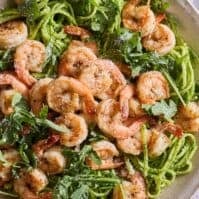
Arugula Pesto Pasta
Tender linguine is tossed with peppery arugula pesto, pine nuts, Pecorino Romano, and lemon, then topped with juicy garlic shrimp for an easy 20-minute dinner.
Servings: 6 people
Ingredients
- ¼ cup pine nuts toasted
- 2 garlic cloves
- 3 cups firmly packed arugula plus extra for garnish
- ¾ cup extra-virgin olive oil
- 2 teaspoons fresh lemon juice
- ⅔ cup grated pecorino romano cheese plus more for garnish
- Kosher salt and freshly ground pepper to taste
- 1 pound linguine
For the Shrimp
- ½ - ¾ lb medium sized shrimp peeled and de-veined
- 1 tablespoon olive oil
- 1 teaspoon garlic powder
- Kosher salt and freshly cracked black pepper
Instructions
- In a food processor, combine the pine nuts and garlic and process until finely chopped. Add the 3 cups arugula and process until coarsely chopped. With the processor running, gradually add the olive oil in a steady stream and process until smooth. Turn off the machine and add the lemon juice and cheese, then pulse until incorporated. Transfer the pesto to a bowl and season with salt and pepper as needed.
- Cook the pasta until al dente. Drain and set aside.
- Toss the shrimp with the oil, garlic powder, and salt and pepper. Sauté for about 3 minutes on each side, until pink and cooked through.
- In a large bowl, toss the pesto with the pasta until well coated. Scatter arugula leaves on top and sprinkle with extra cheese. Serve immediately.
Notes
- Toast the pine nuts in a dry skillet over medium heat until golden before adding them to the food processor. Toasting activates the natural oils in pine nuts and deepens their buttery, nutty flavor. Untoasted pine nuts taste flat and slightly raw in a pesto.
- Use firmly packed arugula and make sure it is completely dry before processing. Excess water from wet arugula will dilute the pesto and prevent the olive oil from emulsifying properly, leaving you with a loose, watery sauce instead of a cohesive one.
- Stream the olive oil in slowly while the food processor is running. Adding the oil gradually creates proper emulsification, binding the fat with the greens and nuts for a smooth, creamy pesto rather than an oily, separated one.
- Add the lemon juice and cheese after the oil with the processor off, then pulse briefly. Over-processing cheese can make it gummy and cause the pesto to turn pasty. Pulsing at the end keeps the texture bright and the cheese evenly distributed without overworking it.
- Reserve at least half a cup of pasta cooking water before draining the linguine. The starchy pasta water acts as a binding agent when tossing the pesto with the noodles. A splash loosens the pesto and helps it cling to every strand of pasta evenly.
- Cook the linguine just to al dente, not beyond. Since you will be tossing the hot pasta with pesto off the heat, the residual warmth will continue softening the noodles slightly. Starting with perfectly al dente pasta prevents it from turning mushy by the time it hits the bowl.
- Pat the shrimp dry with paper towels before tossing them with oil and seasoning. Surface moisture on shrimp causes them to steam rather than sear in the pan, which gives you gray, rubbery shrimp instead of the slightly golden, snappy texture you want.
- Do not overcrowd the pan when cooking the shrimp. Crowding drops the pan temperature dramatically and traps steam, preventing proper browning. Cook in a single layer with space between each shrimp so they sear properly in about 3 minutes per side.
- Pull the shrimp off the heat the moment they curl into a loose C shape. A tight O shape means your shrimp are overcooked. The proteins tighten and squeeze out moisture quickly, so the window between perfectly cooked and rubbery is only about 30 seconds.
- Toss the pesto with warm pasta immediately off the heat rather than reheating pesto in a skillet. Heat destroys the vibrant green color and fresh, peppery flavor of arugula pesto fast. The warmth of freshly drained pasta is all you need to bring everything together.
- Store leftover pesto with a thin layer of olive oil poured directly on the surface before sealing the container. Arugula oxidizes quickly and turns brown when exposed to air. The olive oil acts as a barrier against oxygen and keeps the pesto bright green and fresh-tasting for longer.
- Scatter the extra fresh arugula on top right before serving, not before. Fresh arugula wilts fast once it hits warm pasta. Adding it as a garnish at the last second preserves its peppery bite and gives the dish a textural contrast that gets completely lost if it sits.
Nutrition (estimated)
Calories: 659kcal | Carbohydrates: 59g | Protein: 22g | Fat: 38g | Saturated Fat: 6g | Polyunsaturated Fat: 6g | Monounsaturated Fat: 24g | Trans Fat: 0.002g | Cholesterol: 72mg | Sodium: 187mg | Potassium: 360mg | Fiber: 3g | Sugar: 3g | Vitamin A: 285IU | Vitamin C: 3mg | Calcium: 178mg | Iron: 2mg