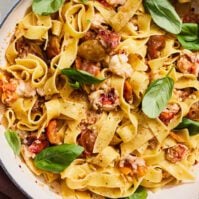
Summer Lobster Pasta
Sweet lobster and burst cherry tomatoes are tossed with pasta in a garlicky white wine butter sauce, then finished with fresh basil and lemon.
Servings: 6 people
Ingredients
- 4 lobster tails 8oz-10oz each, (or 1 pound cooked lobster meat)
- 1 pound pasta
- 4 tablespoons olive oil
- 2 large shallots finely diced
- 6 garlic cloves minced
- 1 teaspoon red pepper flakes
- 2 cups cherry tomatoes halved
- ½ cup dry white wine
- 2 tablespoons unsalted butter
- Kosher salt and freshly cracked pepper
- 2 handfuls basil leaves torn or roughly chopped
- 1 Lemon, zested and juice
Instructions
- If using whole lobsters, cook them in boiling water for 6-8 minutes until bright red. Remove from boiling water, cool completely, and remove the meat from tail, claws, and knuckles, and chop into large chunks.
- Bring a pot of water to a boil and cook pasta.
- While the pasta is cooking, heat the olive oil in a large skillet over medium-high heat. Add shallots and cook for 1 minute, until fragrant. Add garlic and red pepper and cook for 30 seconds. Add tomatoes and season generously with salt and pepper; let cook until the tomatoes start to burst. Add the white wine and cook until reduced. Turn off the heat, add the lobster meat and butter, and stir gently until the butter melts and the lobster is just warmed through.
- When pasta is al dente, drain it, and add to skillet, and season with salt and pepper. Toss well and transfer to a large serving platter. Add basil, lemon zest, and lemon juice; toss once more and serve immediately.
Notes
- Pull the pasta two full minutes before the package directions say it is done. The noodles finish cooking directly in the sauce, absorbing the white wine, butter, and tomato liquid as they go. If you cook them to al dente in the pot first, they will be overcooked and mushy by the time they hit the bowl.
- Reserve at least one full cup of pasta water before you drain. The starchy cooking water is your emulsifier. Adding it a splash at a time as you toss the pasta with the butter and sauce is what makes the coating glossy and cohesive instead of greasy and separated.
- Let the cherry tomatoes sit undisturbed in the pan for two to three minutes before stirring. Leaving them alone lets them blister and burst on one side, releasing their juices into the olive oil and building a jammy, slightly caramelized base. Stirring too early steams them instead of blistering them.
- Add the wine before the garlic has a chance to brown. Garlic goes from golden to bitter in seconds over medium-high heat. Deglazing with the white wine the moment the garlic is fragrant stops the cooking and lifts all the fond from the pan without any burnt flavor getting into your sauce.
- Add the lobster meat at the very end, off the heat. Lobster is already cooked and it overcooks almost instantly. Residual heat from the pasta and sauce is enough to warm it through. Returning it to active heat turns the meat rubbery and tough.
- Swirl the butter in cold, straight from the fridge, one tablespoon at a time. Cold butter emulsifies into the sauce gradually, creating a velvety, restaurant-style finish. Room-temperature butter melts too fast and breaks the emulsion, leaving you with a greasy, separated sauce instead of a glossy one.
- Zest the lemon before you juice it, and add the zest separately from the juice. The zest goes in with the butter at the finish for fragrant citrus oils that brighten the whole dish. The juice is added last, right before serving, as an acid balance. Combining them ahead of time dulls both effects.
- Bloom the red pepper flakes in the olive oil before adding any other aromatics. Fat-soluble capsaicin compounds in the pepper flakes need direct contact with hot oil to fully release their flavor and color. Adding them dry to a wet sauce at the end produces a sharp, raw heat rather than a warm, integrated spice.
- Tear the basil rather than cutting it, and add it off the heat. A knife blade crushes the cell walls and causes basil to oxidize and turn black almost immediately. Tearing leaves keeps more of the volatile oils intact, and adding it off the heat preserves the fresh green flavor without wilting it into the sauce.
- Use a wide, straight-sided skillet rather than a deep pot for this sauce. More surface area means the white wine reduces faster, the tomatoes blister instead of steam, and you can toss the pasta directly in the pan without it piling up and breaking apart. A high-sided pot traps steam and slows down every step of this recipe.
Nutrition (estimated)
Calories: 471kcal | Carbohydrates: 63g | Protein: 18g | Fat: 15g | Saturated Fat: 4g | Polyunsaturated Fat: 2g | Monounsaturated Fat: 8g | Trans Fat: 0.2g | Cholesterol: 64mg | Sodium: 197mg | Potassium: 448mg | Fiber: 4g | Sugar: 5g | Vitamin A: 472IU | Vitamin C: 22mg | Calcium: 74mg | Iron: 2mg