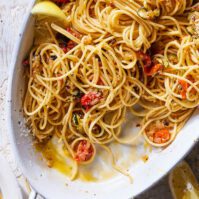
Summer Ratatouille Pasta
Tender pasta is tossed with zucchini, tomatoes, and fresh herbs for a simple, produce-packed spin on classic ratatouille that's perfect for summer dinners.
Servings: 6 people
Equipment
Ingredients
- 1 large zucchini thinly sliced
- 1 pint cherry tomatoes halved
- 1 yellow onion thinly sliced
- 6 cloves garlic roughly chopped
- ½ cup olive oil
- kosher salt and freshly cracked black pepper to taste
- red chili flakes to taste
- 1 pound spaghetti
- 1 lemon zested and juiced
- freshly grated parmesan cheese
Instructions
- Preheat oven to 450 degrees F. Add the first 8 ingredients to a sheet pan and toss to combine.
- Transfer the baking sheet into the oven and roast for about 20-25 minutes until caramelized, tossing halfway through.
- Meanwhile, bring a pot of water to a boil and cook your spaghetti according to the package directions. Drain and set aside.
- Transfer all the roasted vegetables into a bowl with the cooked pasta. Toss to combine and add the lemon zest, juice and plenty of parmesan cheese. Serve immediately.
Notes
- Slice your zucchini thin and uniform, no thicker than a quarter inch. Thick slices stay watery and steam instead of caramelizing in the oven. Thin, even slices roast quickly and develop those golden, slightly crispy edges that make the dish.
- Use a 450-degree oven and do not crowd the sheet pan. High heat is the key to caramelization, not steaming. If the vegetables are piled on top of each other, moisture gets trapped, and you end up with soggy veg instead of roasted ones. Use two sheet pans if needed.
- Toss the vegetables with olive oil directly on the sheet pan, not in a separate bowl. This saves dishes and ensures the oil coats everything evenly right where it needs to be. It also means less cleanup, which is always the move.
- Halve the cherry tomatoes cut-side up on the pan for the first half of roasting. Starting cut-side up concentrates the tomato juices into the flesh before they hit the hot pan surface. When you toss halfway through, the caramelization picks up on both sides.
- Salt the vegetables before roasting, not after. Salting beforehand draws out a small amount of moisture, which then evaporates quickly in the hot oven and accelerates browning. Salting at the end just tastes flat by comparison.
- Reserve at least half a cup of pasta cooking water before draining. The starchy pasta water acts as a binder when you toss everything together, helping the olive oil, lemon juice, and parmesan form a loose, silky sauce that clings to the spaghetti instead of pooling at the bottom of the bowl.
- Add the lemon zest and juice off the heat, not while the pasta is still over the burner. Heat kills the brightness of fresh lemon. Adding it after everything is tossed together keeps that citrus pop front and center, which is what lifts this dish out of being just a basic pasta.
- Grate the parmesan fresh from a block, not from a canister. Pre-grated parmesan is coated with cellulose to prevent clumping, which also prevents it from melting properly. Freshly grated parmesan melts into the pasta and creates a far creamier, more cohesive finish.
- Double the roasted vegetable batch and freeze half in a zip-lock bag flat. The roasted veg freezes beautifully and thaws in about 20 minutes at room temperature. It means you can have this pasta on the table on a weeknight in the time it takes to boil water and cook the spaghetti.
- Bloom the red chili flakes in the olive oil on the sheet pan before adding the vegetables. Tossing the chili flakes in the olive oil first lets the fat carry the heat and flavor throughout every piece of vegetable as they roast. Adding them dry at the end gives you uneven, sharp heat instead of a warm, integrated spice.
- Roughly chop the garlic instead of mincing it. Minced garlic burns at 450 degrees before the other vegetables are done. Larger rough pieces roast more gently, turning sweet and jammy rather than acrid and bitter.
- Toss the hot pasta with the roasted vegetables immediately out of the oven. The residual heat from the vegetables and the pasta water keeps everything loose and allows the parmesan to melt in evenly. Letting either element cool first makes it harder to bring the dish together.
Nutrition (estimated)
Calories: 476kcal | Carbohydrates: 65g | Protein: 12g | Fat: 19g | Saturated Fat: 3g | Polyunsaturated Fat: 2g | Monounsaturated Fat: 13g | Sodium: 18mg | Potassium: 490mg | Fiber: 4g | Sugar: 6g | Vitamin A: 456IU | Vitamin C: 36mg | Calcium: 44mg | Iron: 2mg