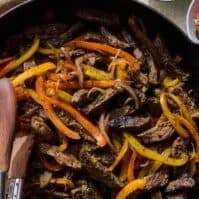
Beef Fajitas with a Cilantro Lime Marinade
Beef Fajitas with Cilantro Lime Marinade featuring skirt steak marinated overnight, charred bell peppers, and onions. The best weeknight fajitas, ready in 40 minutes.
Servings: 6 people
Ingredients
For the marinade:
- 2 limes juiced
- 2 tablespoons olive oil
- 4 cloves garlic minced
- 1 jalapeño seeded and minced
- bunch fresh cilantro roughly chopped
- 1 teaspoon cumin
- ½ teaspoon cayenne pepper
- 1 teaspoon salt
For the Fajitas
- 2.25 pounds skirt steak or flank steak, trimmed of fat
- 1 orange bell pepper thinly sliced
- 1 red bell pepper thinly sliced
- 1 yellow bell pepper thinly sliced
- ½ red onion thinly sliced
- ½ yellow onion thinly sliced
Instructions
- Make the marinade: In a blender, combine all the marinade ingredients and blend until smooth. Taste and adjust seasoning as needed.
- Place the thinly sliced skirt steak in a large bowl or zip-top bag and pour the marinade over the top. Toss to coat evenly, cover, and refrigerate for at least 8 hours or overnight.
- Remove the steak from the marinade and discard the excess liquid. Pat the steak dry with paper towels.
- Heat a large cast iron skillet over medium-high heat until very hot. Working in batches to avoid crowding, cook the steak for about 4 minutes per side until deeply caramelized and crispy on the edges. Transfer to a cutting board and let rest for 5 minutes while you cook the vegetables. In the same skillet with all the steak drippings, add the bell peppers and onions. Sauté over medium-high heat for 8 to 12 minutes, stirring occasionally, until the vegetables are softened and starting to char at the edges. Slice the steak very thin.
- Add the steak back into the skillet with the peppers and onions. Toss to combine, remove from heat, and serve immediately with warm tortillas, guacamole, and salsa.
Notes
-
- Marinate the flank steak for a full 8 hours, minimum. Flank steak is a lean, fibrous cut that genuinely needs time to absorb the acidic lime juice and break down tough muscle fibers. Less than 8 hours and you are leaving flavor and tenderness on the table.
- Do not marinate longer than 24 hours. Lime juice is acidic enough that extended exposure past 24 hours will begin to denature the proteins on the surface of the meat, giving it a mealy, mushy texture rather than a tender one.
- Pat the steak completely dry before it hits the pan. Excess marinade on the surface of the meat creates steam instead of a sear. A dry surface makes direct contact with the hot pan, which is how you get that restaurant-quality char and crust.
- Get your grill pan screaming hot before adding the steak. Flank steak needs high, direct heat to caramelize quickly without overcooking the interior. A pan that is not fully preheated will cause the steak to steam and turn gray rather than sear and brown.
- Cook the steak to medium, no further. Flank steak becomes significantly tougher when cooked past medium (145 degrees F internal temperature). Pull it when there is still a slight pink center and let carryover cooking do the rest.
- Rest the steak for at least 15 minutes before slicing. Resting allows the muscle fibers to relax and reabsorb the juices that have been pushed to the center during cooking. Cut too soon, and those juices run straight onto your cutting board instead of staying in the meat.
- Always slice flank steak against the grain on a diagonal. Flank steak has long, prominent muscle fibers running in one direction. Cutting perpendicular to those fibers shortens them dramatically, making each bite tender instead of chewy and stringy.
- Cook the peppers and onions in the leftover steak juices in the same pan. Those drippings carry the concentrated flavors of the marinade and the Maillard reaction from searing the steak. Using them to cook the vegetables layers in an enormous depth of flavor that a clean pan simply cannot replicate.
- Keep the peppers and onions slightly crisp, not fully soft. Cooking the vegetables for only 5 to 7 minutes preserves a little bite and prevents them from releasing too much water into the pan, which would make the whole mixture soggy instead of vibrant and sizzling.
- Warm your flour tortillas directly over a gas flame or in a dry skillet. Cold or steamed tortillas turn pliable but bland. A quick char on the flame or a 30-second press in a dry cast-iron skillet develops flavor and gives the tortilla enough structure to hold the filling without tearing.
- Seed the jalapeno for moderate heat, or leave the seeds in if you want real fire. The majority of a jalapeno's capsaicin is concentrated in the seeds and the white membrane. Removing them tames the heat significantly, so adjust based on your crowd's spice tolerance rather than defaulting to one approach.
- Make the guacamole fresh the same day you serve the fajitas. Avocado oxidizes quickly once cut, turning brown and losing its bright, creamy flavor within hours. Freshly made guacamole made right before serving is not just prettier, it genuinely tastes better alongside the bold marinade flavors.
Nutrition (estimated)
Calories: 336kcal | Carbohydrates: 8g | Protein: 38g | Fat: 18g | Saturated Fat: 5g | Polyunsaturated Fat: 1g | Monounsaturated Fat: 9g | Trans Fat: 1g | Cholesterol: 107mg | Sodium: 566mg | Potassium: 714mg | Fiber: 2g | Sugar: 3g | Vitamin A: 1447IU | Vitamin C: 97mg | Calcium: 32mg | Iron: 4mg