
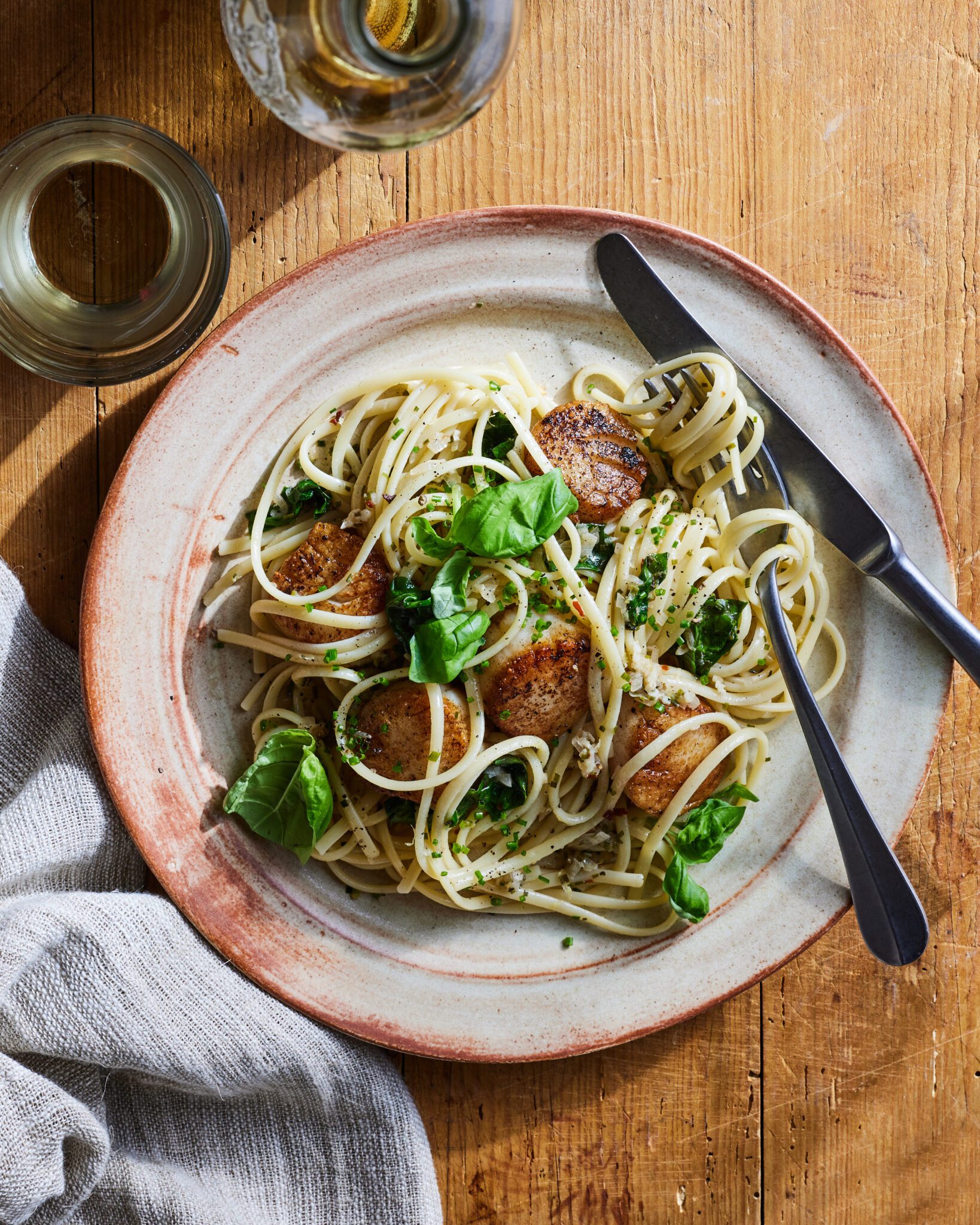
If you're like me and always order scallops at a restaurant, and then think to yourself, why don't I make these at home more...this post is for you. Learning How to Cook Scallops Perfectly Every Time is genuinely one of the most useful skills you can add to your cooking repertoire (thank you culinary school) because once you nail the technique, the possibilities are truly endless.
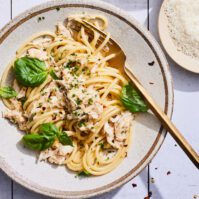
You can keep it simple with a quick lemon garlic pan sauce like we do in the recipe below, toss them into pasta, plate them over crispy rice as an appetizer, etc... the skies the limit. Scallops are tender, lightly sweet, and incredibly flavorful, and they cook in about five minutes once your pan is hot. If you love cooking seafood at home as much as I do, my Lemon Garlic Scallop Pasta, my Summer Seafood Pasta with White Wine Sauce, and my Steamed Mussels with White Wine are all recipes that deserve a permanent spot in your rotation.
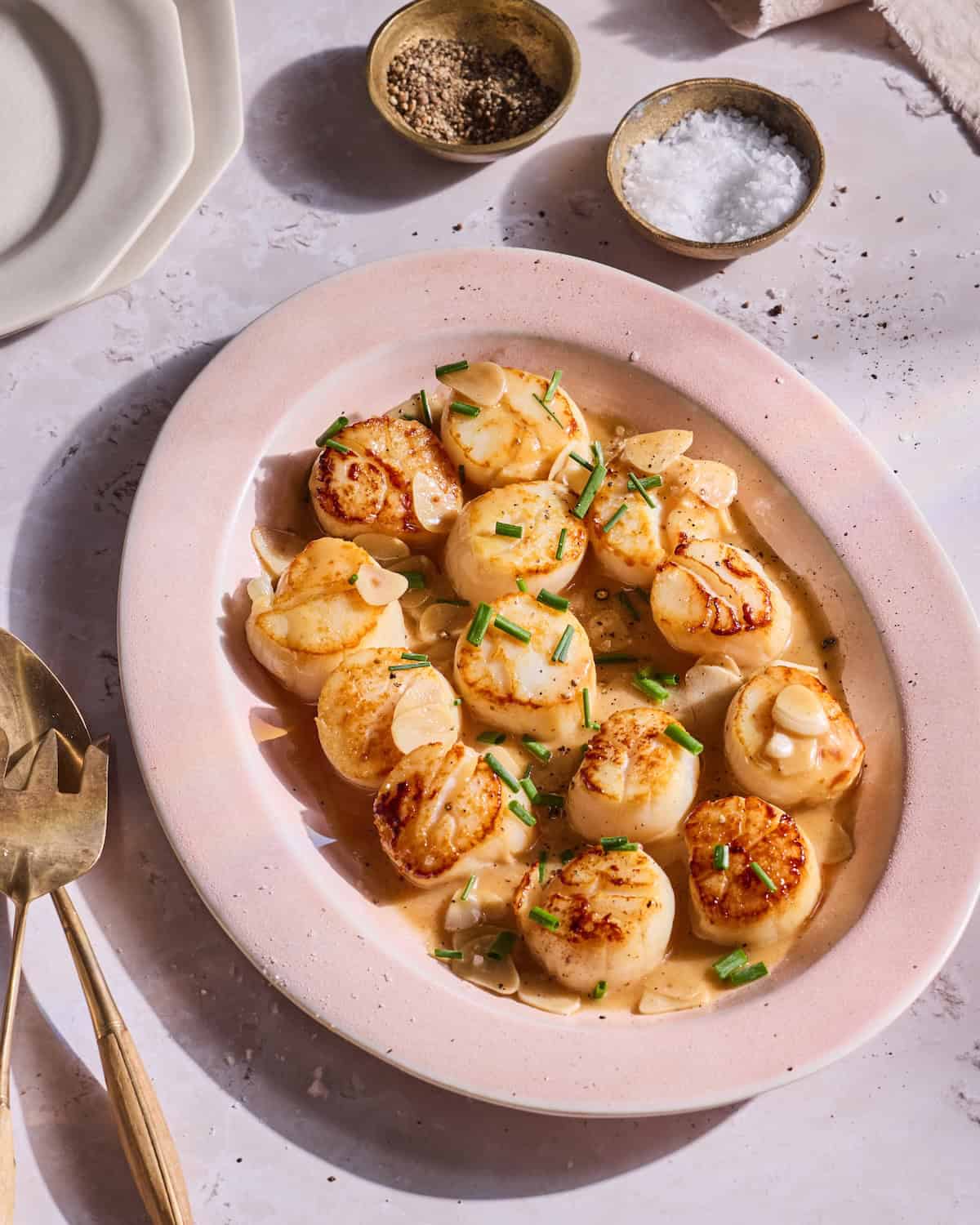
Lemon Garlic Scallops at a Glance
🕒 Total Time: 20 minutes (10 min prep + 10 min cook)
👪 Servings: 4 people
🍝 Cuisine Type: Seafood / Coastal Mediterranean-inspired
🧂 Flavor Profile: Bright, buttery, citrus-forward with light garlic and delicate sweetness from the scallops
📖 Dietary Info: Gluten-free, low-carb, keto-friendly
📦 Storage Notes: Best enjoyed immediately. Refrigerate leftovers up to 2 days; reheat gently to avoid overcooking (scallops become rubbery if overheated).
⭐ Why You’ll Love It: Restaurant-quality scallops in under 20 minutes. Minimal ingredients, golden sear, silky lemon butter sauce, and clean, fresh flavor.
Summarize and save this content on...
Why I Love This Recipe
Buckle up friends. I have a lot to say about how to cook scallops thanks to my culinary school instructors who sent me on my way with a binder full of info that I consistently reference even to this day!! Before we even talk the recipe, let's talk about shopping, because buying the right scallops is half the battle.
There are three kinds of scallops to look out for. Sea scallops are the biggest and my personal favorites, they sear beautifully and are what we are using in the recipe below. Bay scallops are the smallest of the bunch and work better in chowders or pasta where they get folded into a sauce rather than seared individually. Diver scallops are harvested by hand, which makes them a special find when you can track them down.
If you live near the coast and have access to a great seafood market or fishmonger, go fresh. If you are more inland, a high-quality frozen scallop is absolutely the right move since they are typically frozen right at peak freshness after harvest, which means they can actually be better than fresh scallops that have been sitting in a case for a few days.
And the most important thing of all: always look for dry-packed scallops. Dry scallops have not been treated with any phosphate solution, which means they sear to a beautiful golden crust. Wet-packed scallops have been soaked in that solution, which adds water weight and makes it nearly impossible to get a proper sear. They will steam instead of caramelize and you will end up with a pale, rubbery scallop with none of that gorgeous crust. Always ask your fishmonger or check the packaging label.
If using frozen scallops: thaw them overnight in the fridge. I like to place them on a paper towel-lined baking sheet so any excess liquid gets absorbed right away. Never thaw them at room temperature.
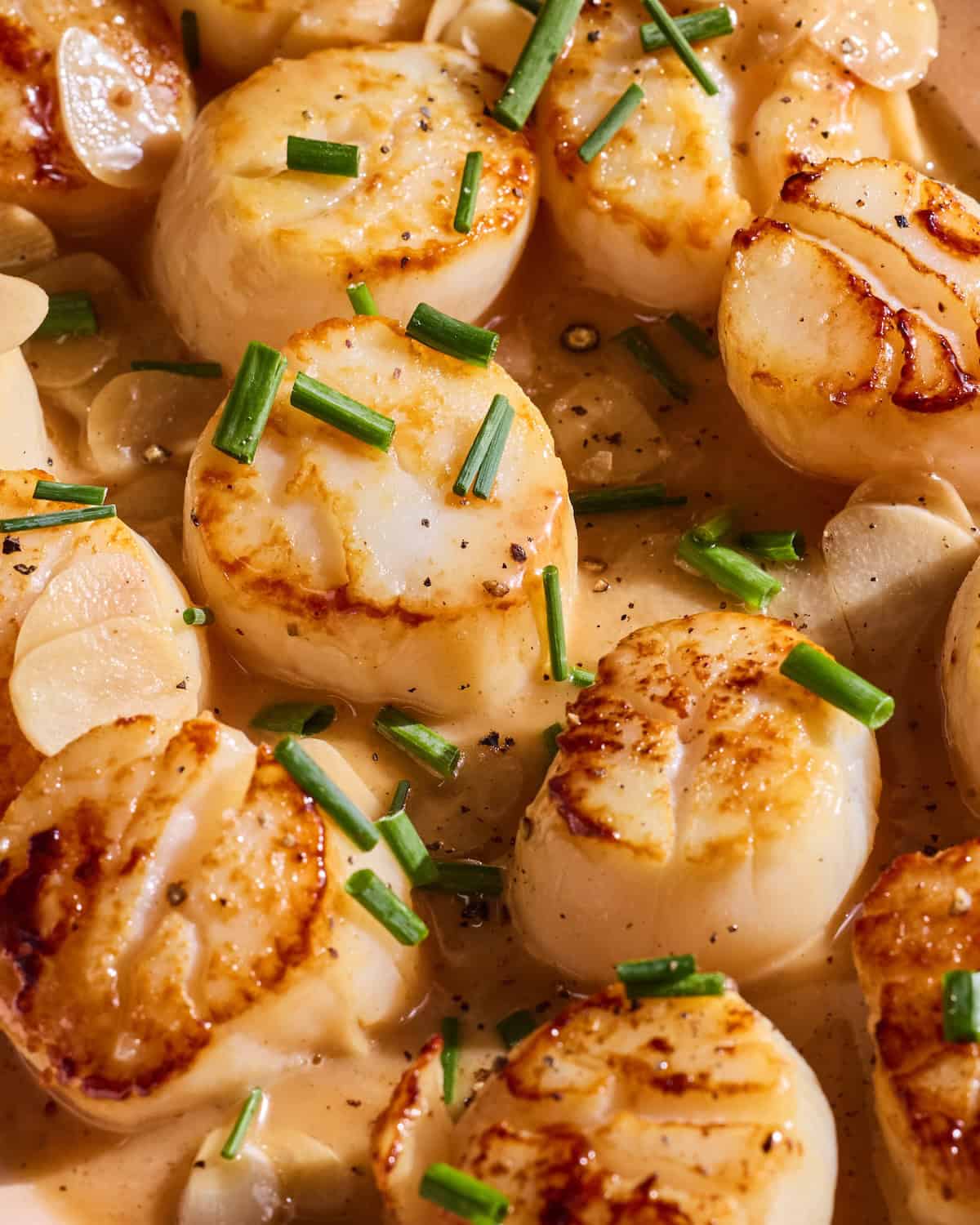
Now that you know how to shop, let me tell you why this Lemon Garlic Scallops recipe is the ultimate way to cook them for the first time, and honestly every time after that. The recipe is stripped down to exactly what scallops need: a hot AF pan, a little olive oil, and patience. You let them develop that deep golden brown crust on both sides without touching or moving them, and then a quick pan sauce of butter, thinly sliced garlic, white wine, lemon juice, and fresh chives takes everything over the top.
The sauce is bright and buttery and uses all those gorgeous browned bits from the pan so nothing gets wasted. Once you make these, you will want to put them on everything. Spoon them next to my Garlic Lemon Bucatini with Crab for a next-level seafood dinner, or keep it simple and serve them alongside my Steamed Clams with Garlic and Chives for the kind of dinner that makes everyone at the table very, very happy.
Jump to:
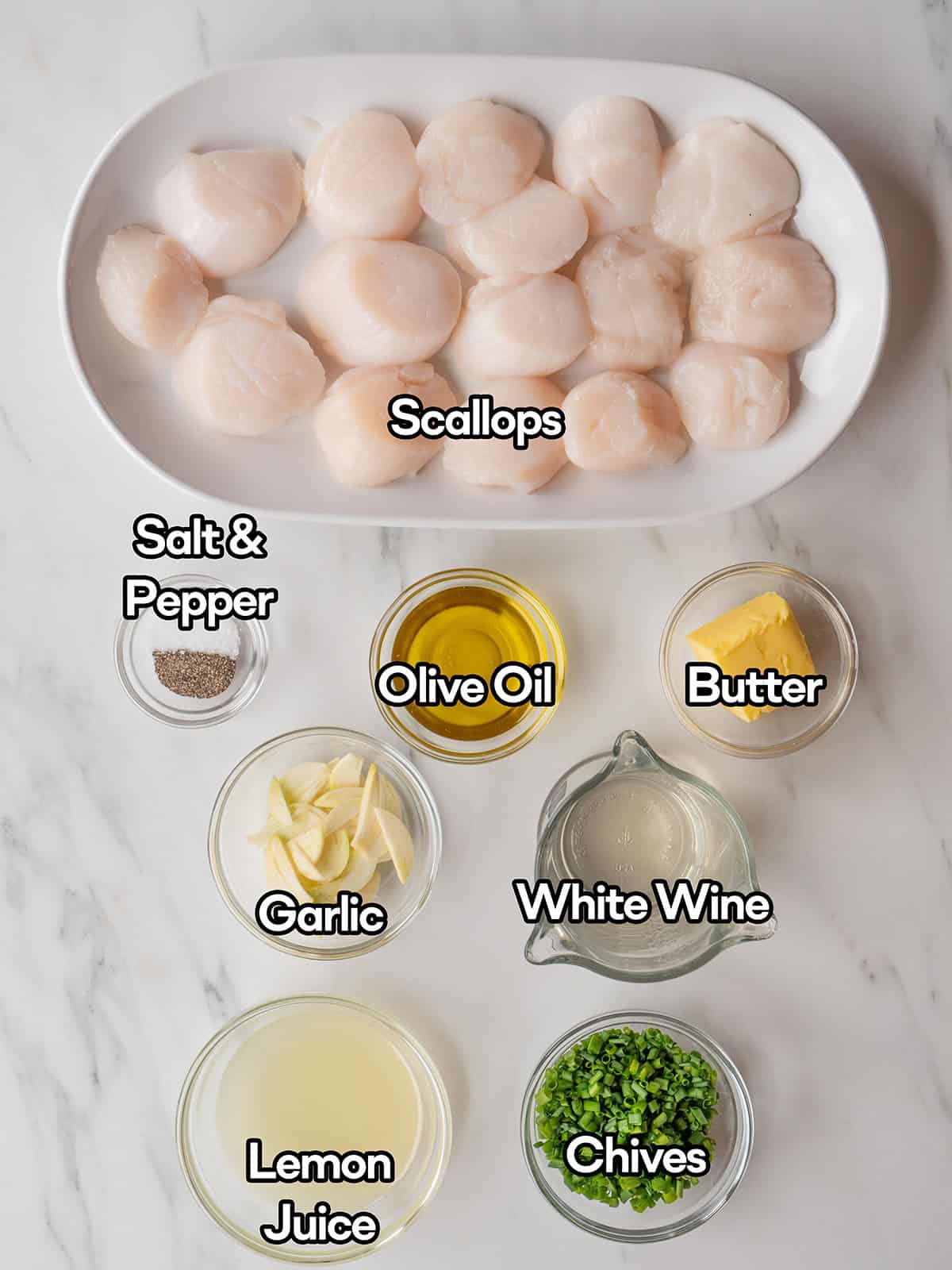
Ingredients
Substitutions & Swaps
🐚 Protein
- Giant Shrimp — Cook slightly longer; excellent with the same sauce
- Halibut or cod — Pan-seared fillets work well with lemon butter
🍋 Sauce Variations
- Chicken broth — Swap for white wine if avoiding alcohol
- Shallots — Use instead of garlic for a milder, sweeter base
- Parsley or basil — Replace chives for a different herb profile
- Capers — Add briny contrast to the lemon butter sauce
🧈 Fat Options
- All butter — Richer sauce (omit olive oil for searing if preferred)
- Ghee — Higher smoke point and nutty flavor
- Vegan butter — Works for dairy-free version
How to Cook Scallops
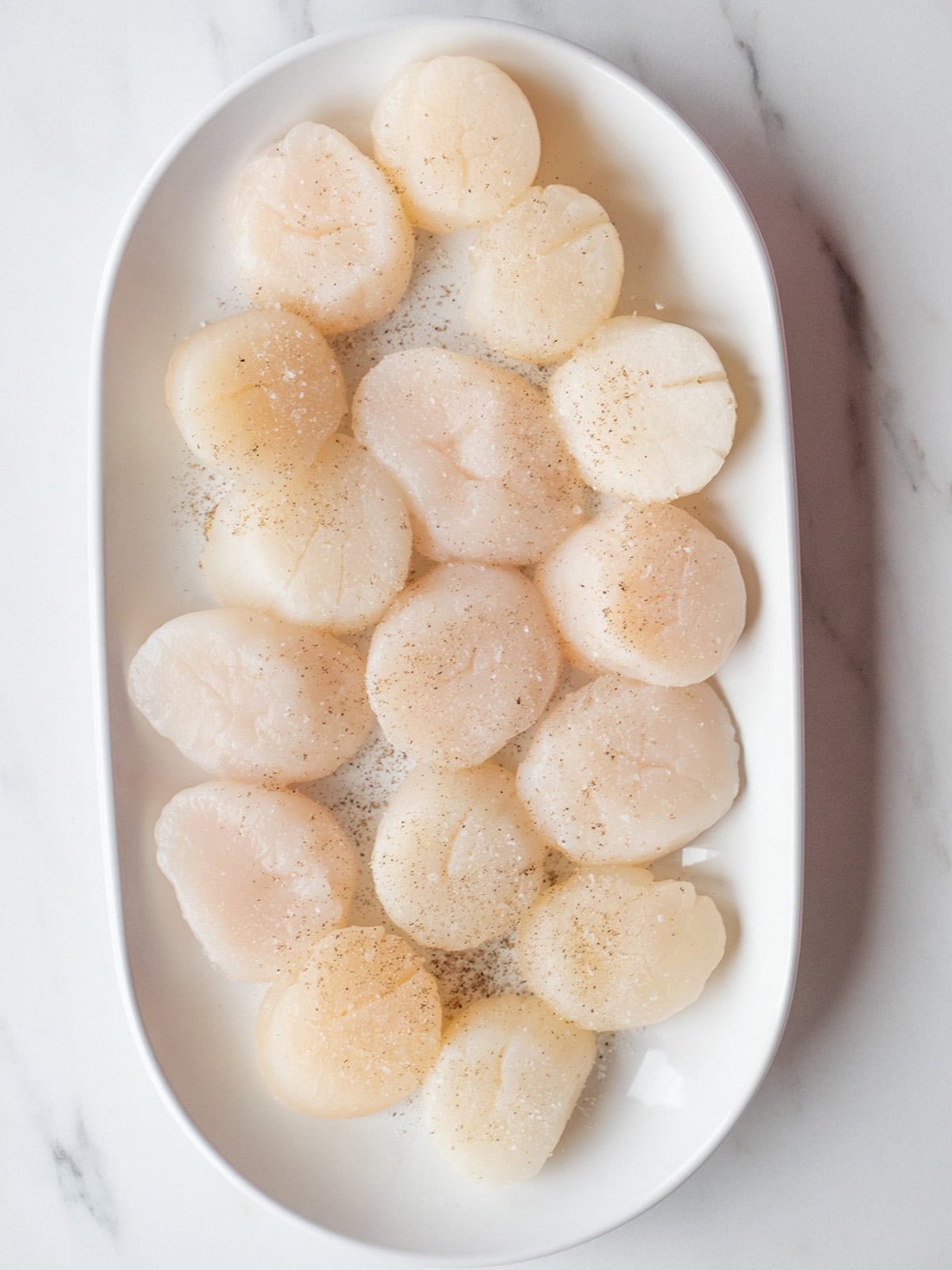
Step 1: Remove side muscle from scallops if needed. Pat dry and season.
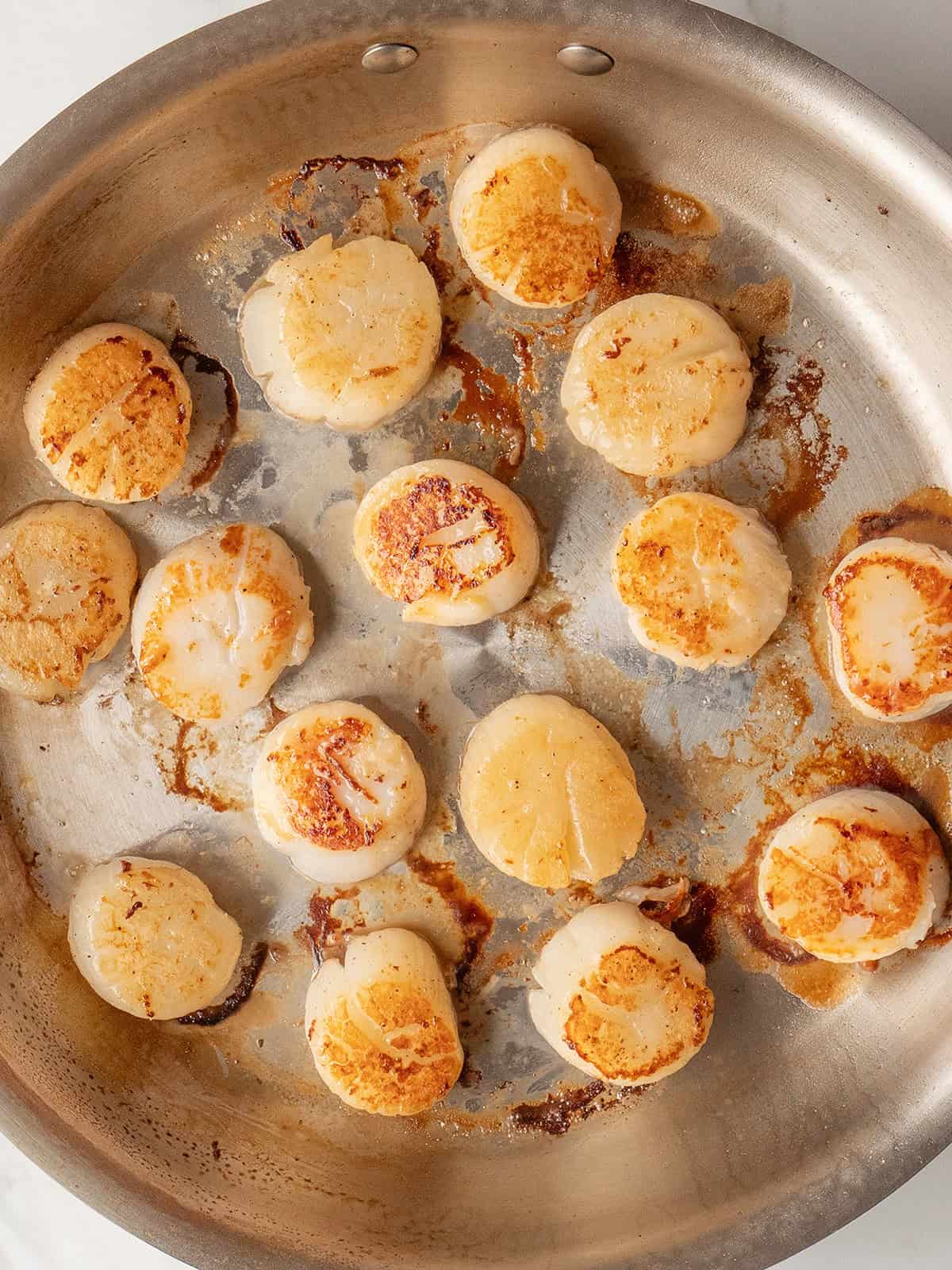
Step 2: Heat olive oil in a skillet over medium-high. Sear scallops 2–3 minutes per side until golden brown. Remove to plate.
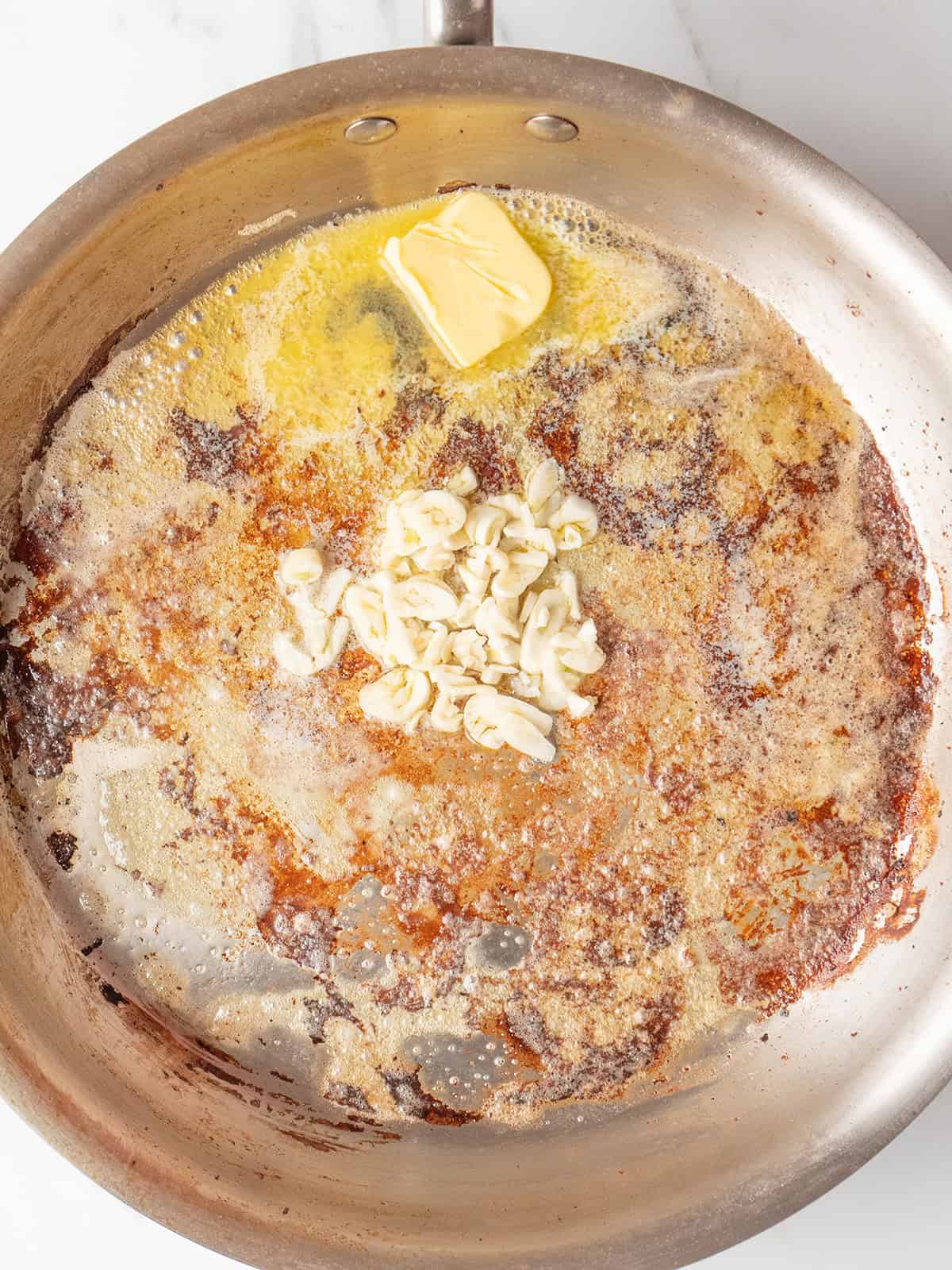
Step 3: Pour off excess oil. Add butter and melt.
Step 4: Add garlic and sauté 30 seconds.
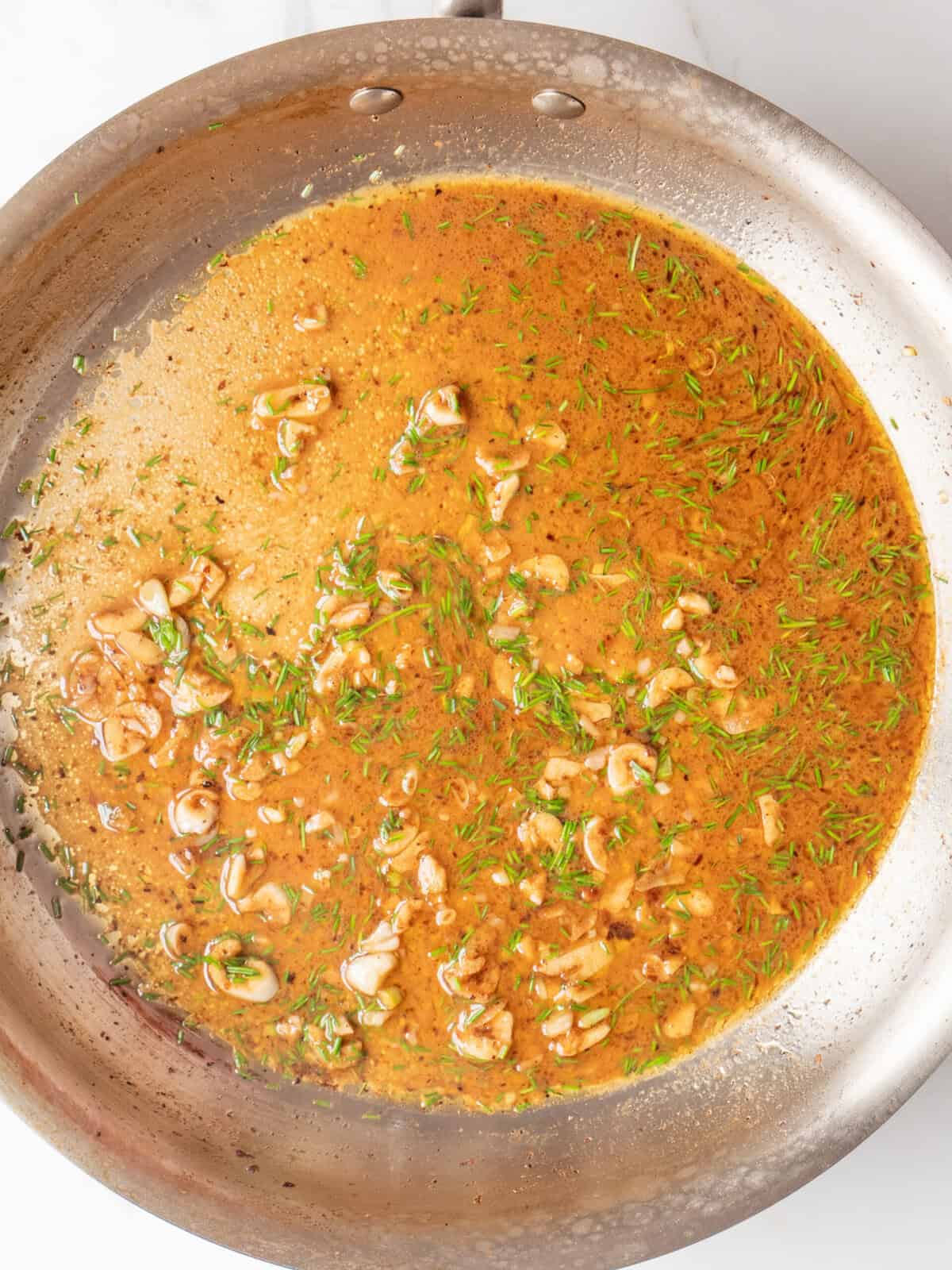
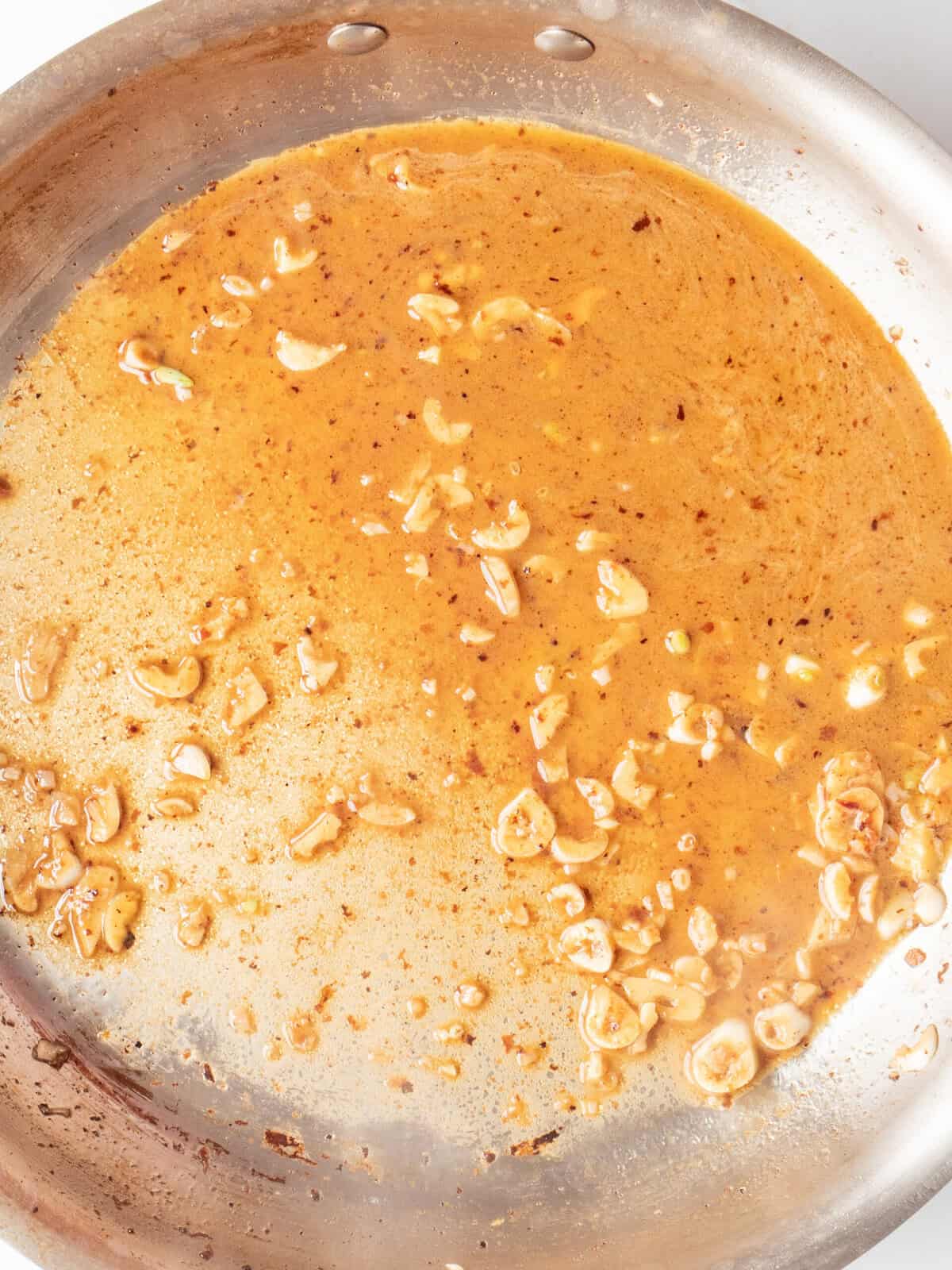
Step 5: Add wine and scrape up bits. Cook until reduced. Add lemon juice and chives.
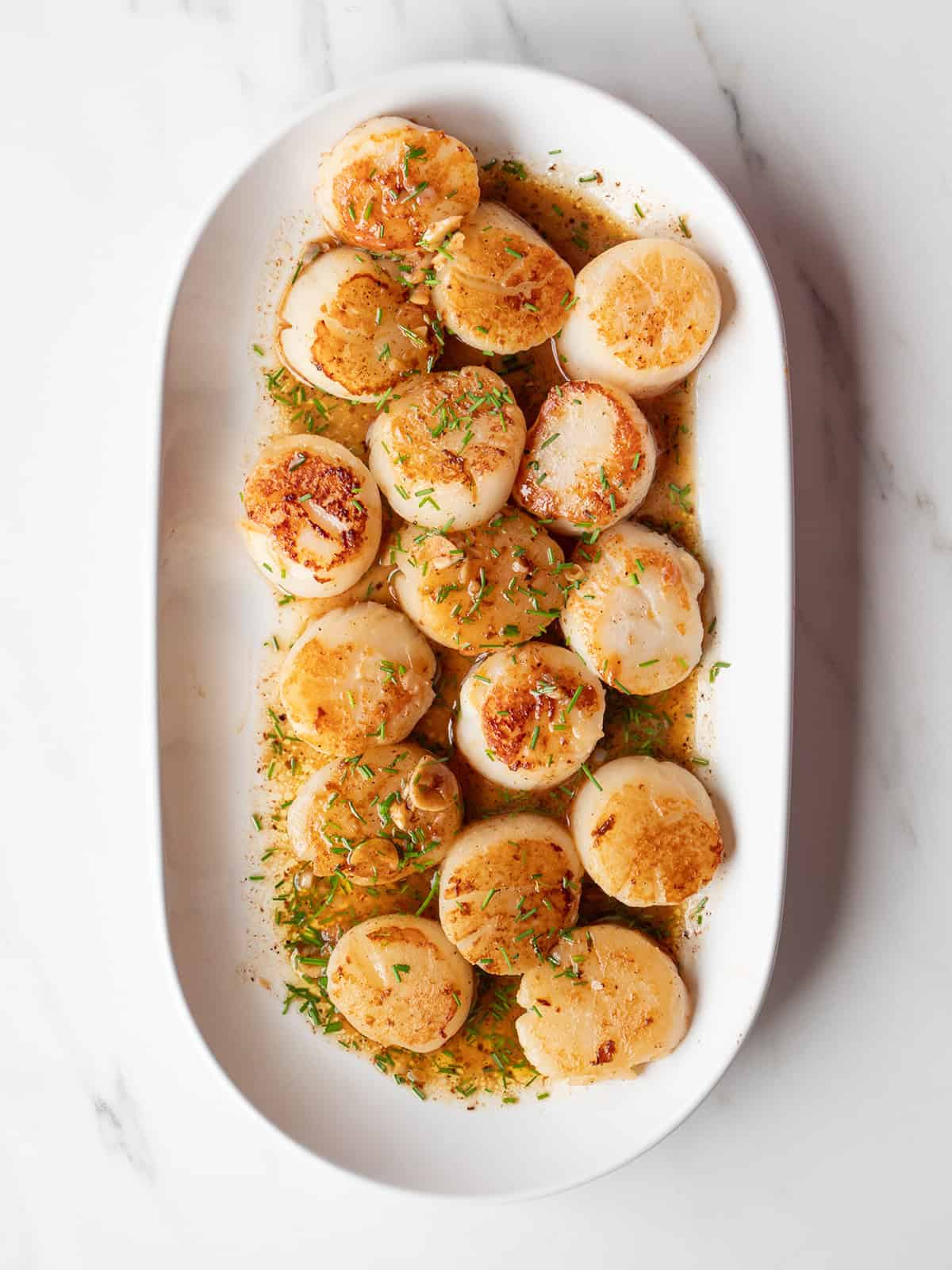
Step 6: Drizzle sauce over scallops and serve.
Tips & Tricks for How to Cook Scallops
- Always buy dry-packed. I said it above and I will say it again. Dry-packed scallops sear. Wet-packed scallops steam. This is the single most important thing you can do before you even turn on the stove.
- Pat them completely dry right before they go in the pan. Press each scallop firmly between paper towels right before it hits the pan. Any moisture on the surface creates steam and prevents that crust from forming.
- Remove the side muscle. That small, tough rectangular tab on the side of each scallop is the adductor muscle. It cooks differently than the rest of the scallop and will be chewy if left on. Just pinch and pull it off. Takes two seconds and makes a real difference in the final texture.
- Your pan must be genuinely hot. Heat your skillet over medium-high until it is truly, aggressively hot before the oil goes in. Cast iron is ideal. If you add a drop of water and it evaporates on contact immediately, you are ready. A not-hot-enough pan means no crust, and no crust means very sad scallops.
- Do not touch them. Once the scallops go into the pan, put your tongs down and step back. Let them cook completely undisturbed for 2 to 3 minutes. They will release naturally from the pan when the crust has formed. If they are sticking when you try to flip, give them another 30 seconds and try again.
- Cook in batches. Do not crowd the pan. Crowding drops the oil temperature and causes steaming rather than searing. Give each scallop room to breathe and cook them in two batches if needed.
- Make the sauce in the same pan. All those browned bits stuck to the bottom after searing are pure concentrated flavor. The white wine deglazes the pan and lifts every last bit of that goodness into the sauce. Do not skip this step and do not switch pans.
FAQ's
How do I know when my scallops are done?
A properly cooked scallop is opaque all the way through with a deep golden crust on both flat sides. It should feel firm but have a slight give when pressed, similar to a medium-rare steak. Overcooked scallops feel tight and rubbery. When in doubt, pull them slightly early since they continue cooking from residual heat.
What is the difference between dry and wet scallops?
Dry scallops are untreated and sear to that gorgeous golden crust we are all chasing. Wet scallops have been soaked in a phosphate solution that adds water weight and makes it impossible to get a proper sear. Always ask for dry-packed and look for it on the label.
Can I use frozen scallops?
Yes, absolutely. Thaw them overnight in the fridge on a paper towel-lined baking sheet to absorb excess liquid, then pat them very dry before searing. Do not thaw in warm water as it affects the texture.
Why do my scallops stick to the pan?
Either the pan was not hot enough before the scallops went in, or you tried to flip them too early. Let them cook undisturbed until the crust releases them naturally. If they are still sticking, they need more time on that side.
What should I serve with seared scallops?
They pair well with risotto, pasta, crusty rolls, mashed potatoes, or a simple green salad to soak up the sauce.
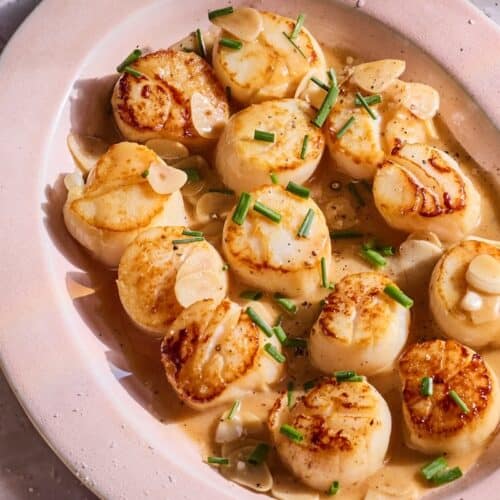
Lemon Garlic Scallops
Ingredients
- 16 large dry sea scallops side muscles removed
- Kosher salt and freshly cracked black pepper
- 2 tablespoon olive oil
- 3 tablespoons unsalted butter
- 4 cloves garlic thinly sliced
- ¼ cup white wine
- 1 lemon juiced
- 4 tablespoon chives finely sliced
Instructions
- Remove the side muscle from each scallop if still attached. Pat the scallops completely dry on both sides with paper towels. Season generously with kosher salt and freshly cracked black pepper on both sides.
- Heat a large cast iron or stainless steel skillet over medium-high heat until very hot. Add the olive oil and let it heat until shimmering. Working in batches if needed so as not to crowd the pan, place the scallops flat side down. Cook completely undisturbed for 2 to 3 minutes until a deep golden crust forms and the scallops release easily from the pan. Flip and cook for 1 to 2 minutes more until opaque through the center. Transfer to a clean plate.
- Pour off any excess oil from the skillet. Return the pan to medium heat and add the butter. Let it melt and cook, swirling, until it just begins to foam, about 30 seconds. Add the garlic and sauté for 30 seconds until fragrant, being careful not to let it burn.
- Pour in the white wine and scrape up any browned bits from the bottom of the pan. Let it cook until mostly reduced, about 1 minute. Add the lemon juice and half the chives and stir to combine. Drizzle the pan sauce over the scallops, scatter the remaining chives on top, and serve immediately.
Notes
- Always buy dry-packed. Dry-packed scallops sear, wet-packed scallops steam, and that is the whole game.
- Pat them bone dry. Any surface moisture will kill your crust before it even starts.
- Remove the side muscle. That small tough tab on the side will be chewy, just pinch and pull it off.
- Get your pan genuinely hot. If a drop of water evaporates on contact, you are ready.
- Do not touch them. Let them cook undisturbed for 2 to 3 minutes until they release naturally from the pan.
- Cook in batches. Crowding drops the temperature and you will get steam instead of a sear.
- Make the sauce in the same pan. Those browned bits are pure flavor, do not waste them by switching pans.



So delicious and informational! Thanks Gaby!!
First time cooking scallops and they turned out great. Thanks for holding my hand!
I am 96, and your resepies surely bring back wonderful dishes
Ok yum! On my menu next week!
what kind of skillet is best to cook scallops?
I like a heavy bottom cast iron or stainless! Just don't use a non-stick - they don't sear as nicely
Thank you for this! So helpful.
You said this post would cover how to shop for scallops but it doesn't! 🙁 Can you please share? 🙂 How to shop for seafood in general would be so helpful! Thank you!
ah! must have gotten lost in formatting - it's there now!
Thank you, thank you, thank you!! I really needed this little tutorial!! Delicious!