
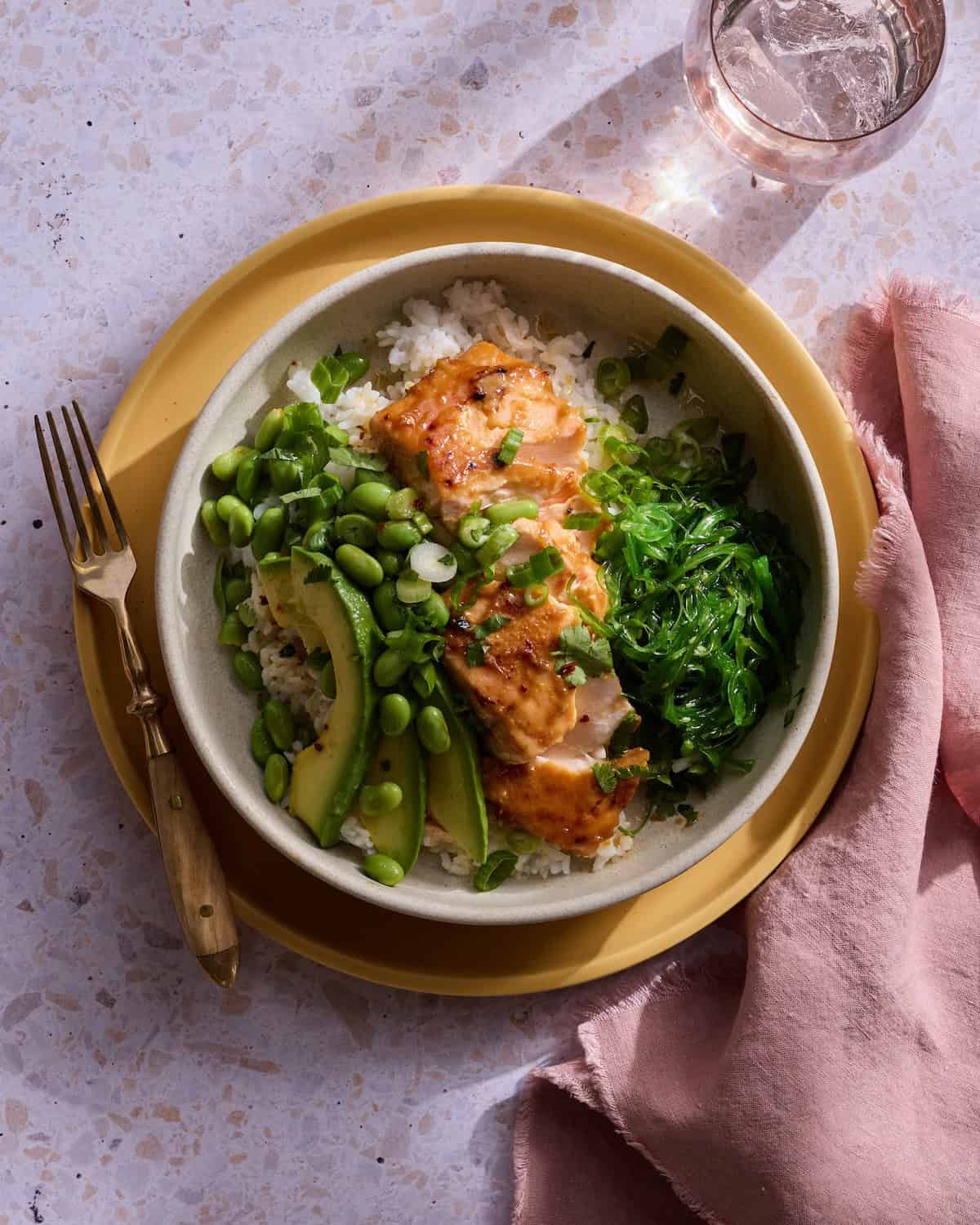
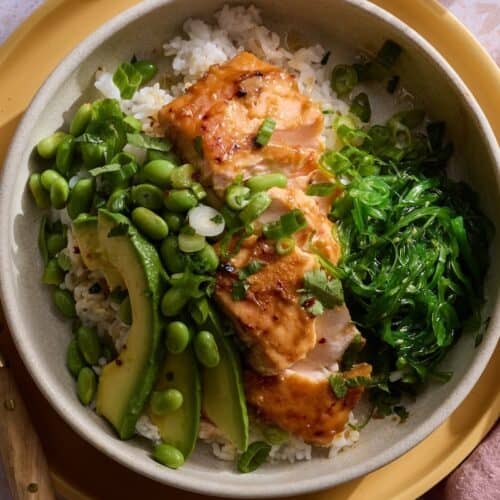
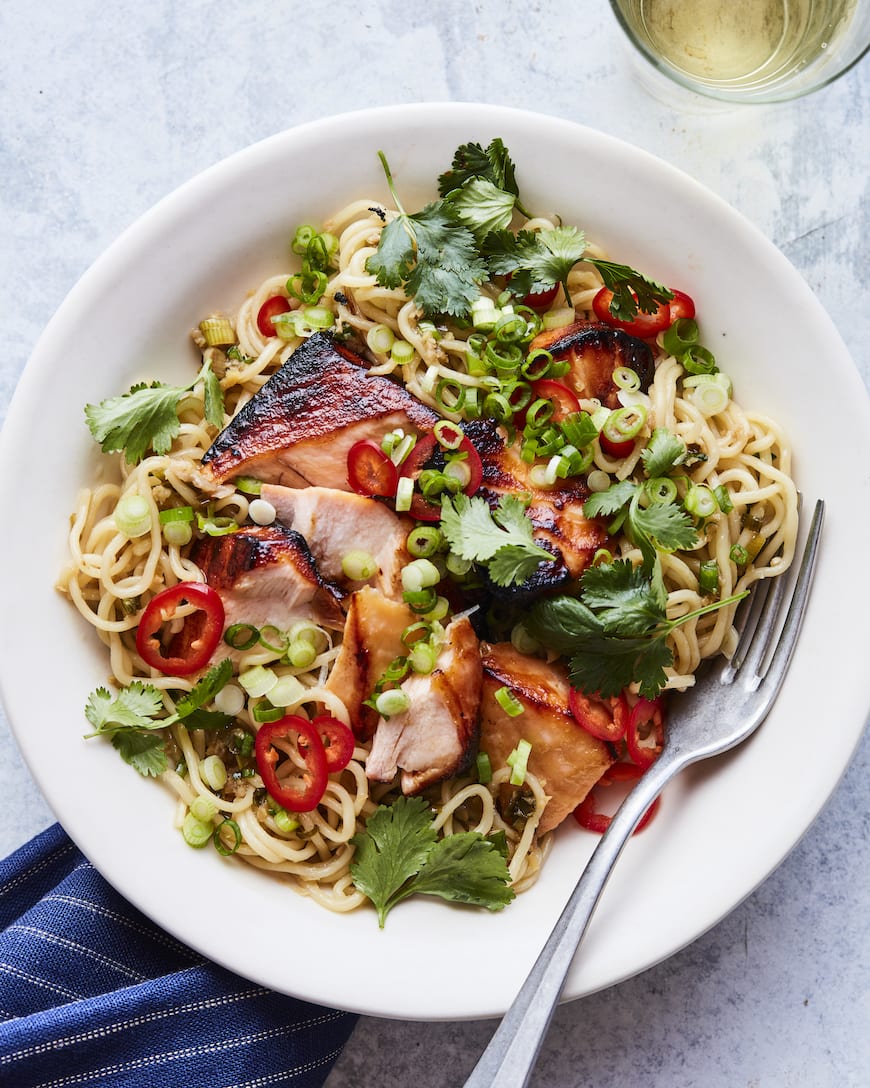
If you've been following along for any amount of time, you know that salmon bowls are basically a weekly staple in my kitchen, and this Miso Salmon Bowl has officially become one of my all-time favorites. The combination of a sweet and savory miso glaze over perfectly cooked salmon, piled onto a bed of sushi rice with all the best toppings, is the kind of dinner that feels v special without requiring a ton of effort. Miso Salmon Bowls are right up there with my Broiled Miso Salmon with Sesame Ginger Noodles, Spicy Salmon Sushi Bowls and Vegetarian Avocado Sushi Bowls.
Miso Salmon Bowl at a Glance
- 🕒 Total Time: 30 minutes
- 👪 Servings: 2
- 🍝 Cuisine Type: Japanese / Asian-Inspired
- 🧂 Flavor Profile: Savory and slightly sweet miso glaze coats tender flaky salmon, balanced by creamy avocado, chewy edamame, and a bright tangy ponzu dressing over sticky sushi rice.
- 📖 Dietary Info: Contains soy and fish. Use tamari for a gluten-free option. Dairy-free.
- 📦 Storage Notes: Store components separately in airtight containers in the refrigerator for up to 3 days and assemble just before serving.
- ⭐ Why You'll Love It: This Miso Salmon Bowl is everything I want for a weeknight dinner that feels a little fancy without any of the fuss. The miso glaze comes together in minutes and the salmon is perfectly cooked every single time. All those toppings make it feel like a restaurant-quality meal you built at home. It is also meal prep gold because the leftovers are just as good the next day served cold.
Summarize and save this content on
Why I Love This Recipe
Here is what makes this miso salmon bowl different from every other salmon bowl in the WGC lineup and why it deserves its own permanent spot in your weeknight rotation. The miso marinade is the secret. White miso is naturally sweet, deeply umami, and slightly funky in the best possible way, and when you whisk it together with soy sauce, honey, and rice vinegar and spread it over the salmon, it forms this incredible glaze as it cooks that caramelizes on the outside of the fish and creates a flavor that is so complex and satisfying you will be scraping the pan for every last bit.
Then the ponzu dressing over the top ties everything together with this bright, citrusy, slightly tangy quality that makes the whole bowl feel incredibly fresh and light even though it is also deeply rich and satisfying at the same time. Make a triple batch of the dressing because I can promise you'll want it for other uses.
The seaweed salad is non-negotiable for me here. It adds this briny, oceanic depth that makes the whole bowl taste like something you would order at a really good Japanese restaurant rather than something you threw together on a Tuesday. If you want to build out a full spread, serve this Miso Salmon Bowl alongside my Cucumber Salad on the side for the freshest, most satisfying dinner you will make all week.
Jump to:
Ingredients
Substitutions & Swaps
🐟 Salmon
- Steelhead trout - Nearly identical fat content and texture to salmon, so the miso glaze caramelizes the same way in the oven. The flavor is slightly milder, which lets the ponzu dressing shine more.
- Tuna steak - Sear it hard on both sides and leave the center rare. The miso marinade works beautifully as a crust on the outside while the center stays silky, very similar to a restaurant tataki preparation.
- Shrimp - Reduce the marinade time to 5 minutes max since the miso can start to break down the delicate proteins quickly. Pan sear over high heat for 2 minutes per side and you get a gorgeous caramelized exterior.
- Tofu (extra firm) - Press it thoroughly and slice into thick slabs. The miso glaze adheres well and gets a deep golden crust under the broiler, giving you a satisfying savory bite that holds up against all the bowl toppings.
🍚 Sushi Rice
- Jasmine rice - It has a slightly floral aroma that pairs nicely with the sesame and ponzu dressing. Less sticky than sushi rice but still hearty enough to anchor the bowl without everything sliding around.
- Brown rice - Adds a nutty, slightly chewy texture that contrasts well with the soft avocado and tender salmon. It takes longer to cook so plan ahead, but the extra fiber makes the bowl a lot more filling.
- Cauliflower rice - Pulse raw cauliflower in a food processor and saute briefly in sesame oil. It picks up the ponzu dressing really well and keeps the bowl lighter without sacrificing volume.
🥣 Miso Glaze
- Red miso instead of white - Red miso is more deeply fermented with a stronger, saltier, more umami-forward flavor. Use slightly less (about 1.5 tbsp) so it does not overpower the salmon, and expect a richer, darker caramelized finish.
- Tamari instead of soy sauce - Tamari is thicker and slightly richer than regular soy sauce with a deeper roasted quality. It makes the glaze feel more cohesive and adds a subtle complexity that regular soy can miss.
- Maple syrup instead of honey - Maple brings a woodsy, caramel-like sweetness that pairs especially well with the savory miso. It also helps the glaze develop a slightly deeper color when it hits the heat of the oven.
- Apple cider vinegar instead of rice vinegar - A bit more assertive than rice vinegar but still bright and fruity. Use just a splash since it is stronger, and it keeps the balance of sweet, salty, and acidic in the glaze right where it needs to be.
🥑 Bowl Toppings
- Cucumber instead of seaweed salad - Use a peeler to make long thin ribbons and toss them in a little rice vinegar and sesame oil. They bring a cool, crisp contrast to the warm salmon and add freshness without the oceanic flavor of seaweed.
- Pickled radishes instead of scallions - Quick pickle sliced radishes in rice vinegar, sugar, and salt for 15 minutes. They bring a punchy acidity and a beautiful pop of color that cuts through the richness of the miso salmon and avocado.
- Fresh mint instead of cilantro - If cilantro is not your thing, fresh mint brings a cool herbal brightness that works surprisingly well with the ponzu dressing and sesame oil. Use it sparingly since it can dominate quickly.
- Mango slices instead of avocado - Ripe mango adds a sweet, juicy contrast to the salty miso glaze that is genuinely excellent. It also holds up better if the bowl is going to sit for a bit since it does not brown the way avocado does.
🍋 Ponzu Dressing
- Lime juice and soy sauce - A simple 2 to 1 mix of soy sauce and fresh lime juice mimics ponzu really well in a pinch. Lime has a sharper, more aromatic citrus profile than lemon, which keeps the dressing feeling bright and light.
- Ginger sesame dressing - Whisk together fresh grated ginger, sesame oil, soy sauce, and a splash of rice vinegar. It leans more savory and aromatic than ponzu but ties together all the Japanese-leaning flavors in the bowl really cohesively.
How to Make Miso Salmon Bowl
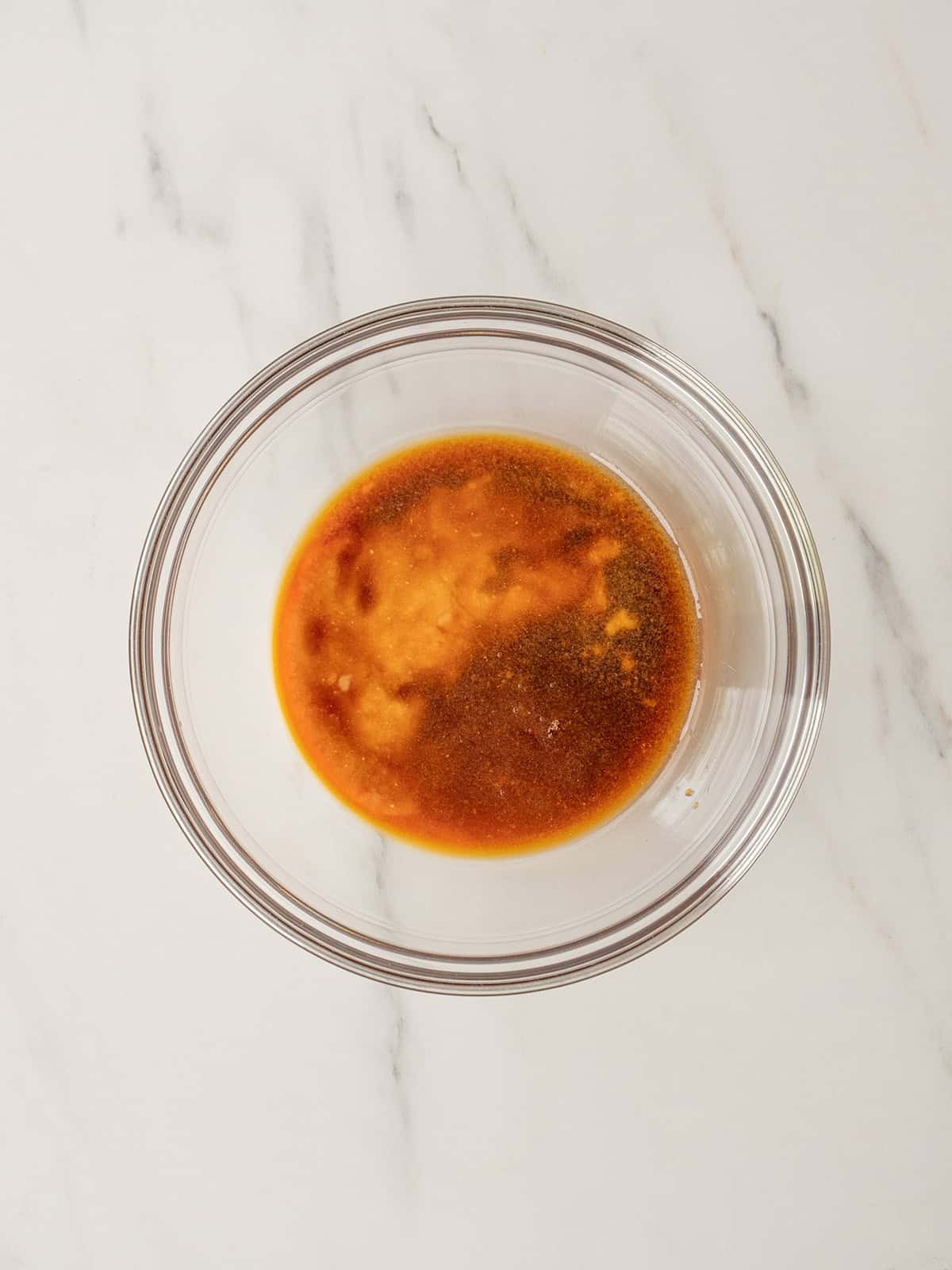
Step 1: Whisk miso, soy, honey, and vinegar.
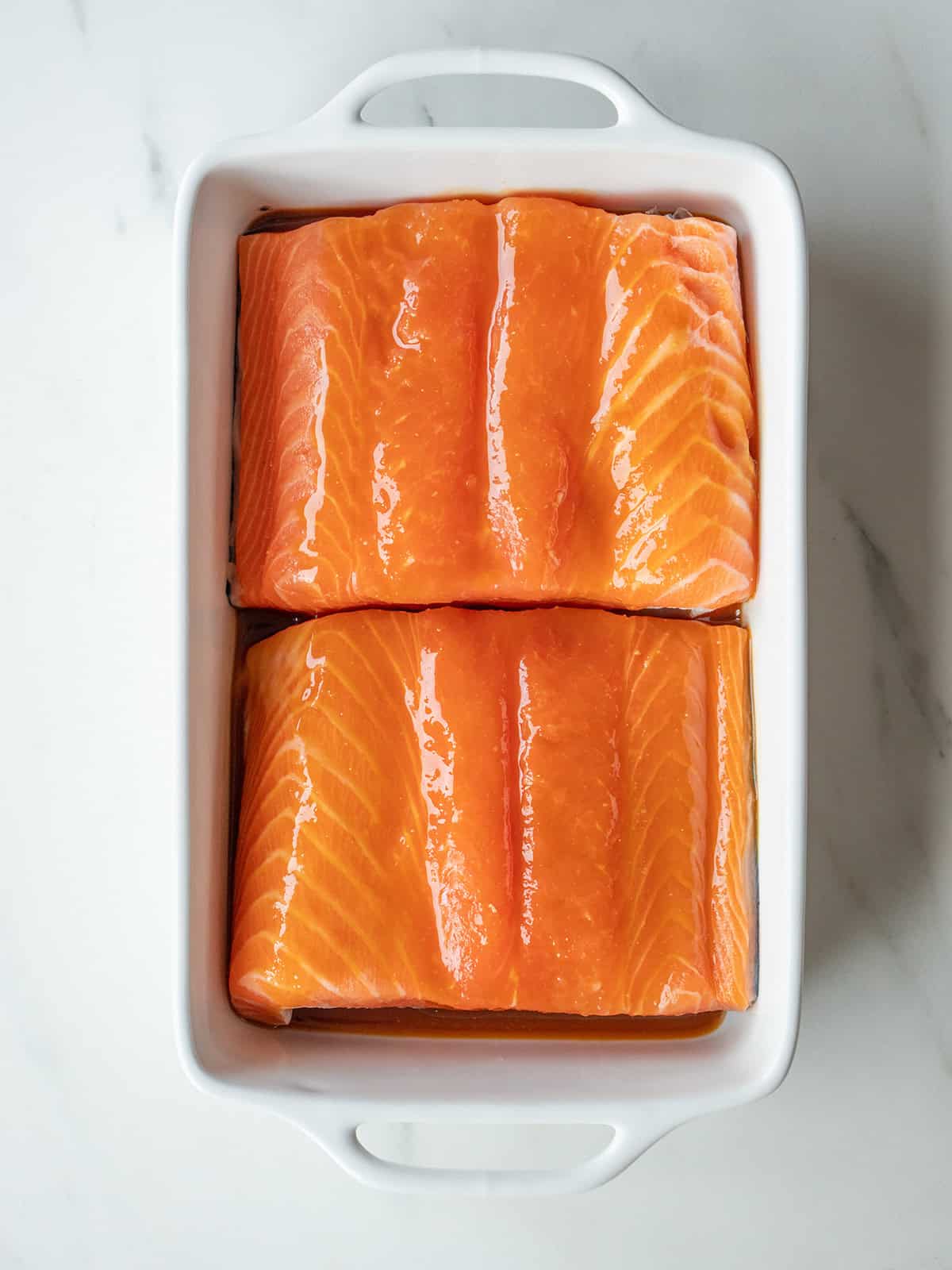
Step 2: Spread over salmon and let sit for 10–15 minutes.
Bake at 400°F for 8–10 minutes or pan sear until cooked through.
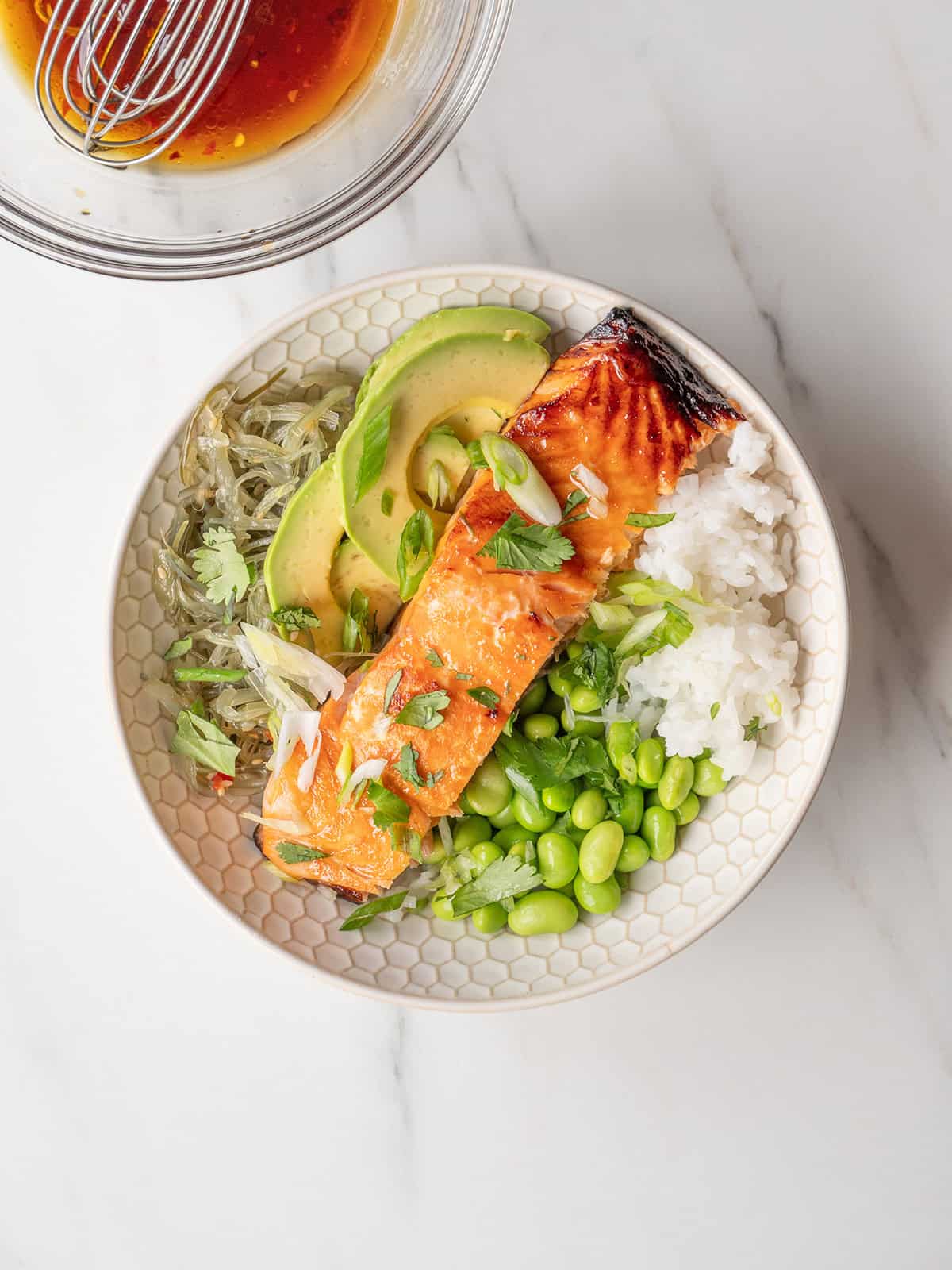
Step 3: Divide rice into bowls. Top with salmon, avocado, edamame, seaweed, scallions, and cilantro.
Whisk dressing and drizzle over the top.
🍣🥑🍚 Tips & Tricks for the Best Miso Salmon Bowl
Everything you love about a sushi restaurant, made at home in under 30 minutes.
- Pat the salmon completely dry before spreading on the miso marinade. Excess moisture on the surface of the fish will dilute the miso glaze and prevent it from caramelizing properly during cooking. A dry surface means better adhesion and a more flavorful crust.
- Use white miso, not red or brown, for this glaze. White miso has a milder, sweeter flavor profile with lower salt content, which keeps the glaze from turning bitter or overly salty when it hits the heat of the oven or pan. Red miso will overpower every other component in the bowl.
- Do not marinate the salmon for longer than 30 minutes. Miso is high in salt, and extended contact will begin to cure the exterior of the fish, changing its texture to something mealy and dense rather than silky and flaky. Ten to fifteen minutes is the sweet spot.
- If pan searing, use a combination of olive oil and a tiny bit of butter in the pan. The butter accelerates browning on the miso-coated surface through the Maillard reaction and adds a richness that pure olive oil cannot replicate. Keep the heat at medium-high and do not move the salmon once it hits the pan.
- Spread the cooked sushi rice in a wide, shallow bowl to cool slightly before assembling. Piling hot rice directly under cold toppings like avocado and seaweed salad will cause the avocado to oxidize faster and make the seaweed salad go limp almost immediately. A couple of minutes of cooling makes a noticeable difference.
- Slice the avocado right before serving, not in advance. Avocado begins oxidizing and turning brown within minutes of being cut. If you are meal prepping, store the avocado half uncut with the pit in, wrapped tightly in plastic wrap, and slice it fresh at assembly time.
- Whisk the ponzu dressing with sesame oil last, just before drizzling. Sesame oil loses its aromatic punch quickly once agitated and mixed. Adding it at the last moment ensures the nutty, toasted fragrance is at full strength when it hits the bowl.
- Warm the edamame briefly in a dry skillet or the microwave before adding it to the bowl. Cold edamame pulled straight from the freezer or refrigerator creates a jarring temperature contrast against the warm rice and freshly cooked salmon. A quick 60 seconds of heat brings everything into harmony.
- Slice scallions on a sharp bias rather than straight across. A bias cut creates a longer, more elegant piece that holds its shape under the ponzu dressing and adds a visual layering effect to the bowl. Straight rounds tend to sink and disappear into the other toppings.
FAQ's
Can I use frozen salmon?
Yes. Thaw completely and pat dry before marinating and cooking.
What's the best type of rice for a Miso Salmon Bowl?
Sushi rice is ideal because of its slightly sticky texture, but jasmine or short-grain rice also works well.
Can I make these Miso Salmon Bowl ahead of time?
Yes. Prep the components ahead and assemble just before serving.
Is a Miso Salmon Bowl spicy?
No. The miso glaze is savory and slightly sweet. Add chili crisp or red pepper flakes if you'd like heat.
Can I serve a Miso Salmon Bowl cold?
Absolutely. Leftover miso salmon is delicious chilled and works well for meal prep lunches.
What is Ponzu?
Ponzu is a Japanese citrus-based sauce made with soy sauce, citrus juice (usually yuzu or a blend of citrus), and sometimes mirin and rice vinegar. It is bright, tangy, and slightly savory. You can find it at most grocery stores, Whole Foods, Trader Joe's, and any Asian grocery store. Kikkoman makes a widely available version but if you can find this one, it's exceptional!
Where do I find seaweed salad?
Most Whole Foods and Trader Joe's carry it pre-made in the refrigerated seafood section. Asian grocery stores almost always have it. If you cannot find it, thinly sliced nori sheets or furikake sprinkled over the top are great alternatives.

Miso Salmon Bowl
Ingredients
Ingredients
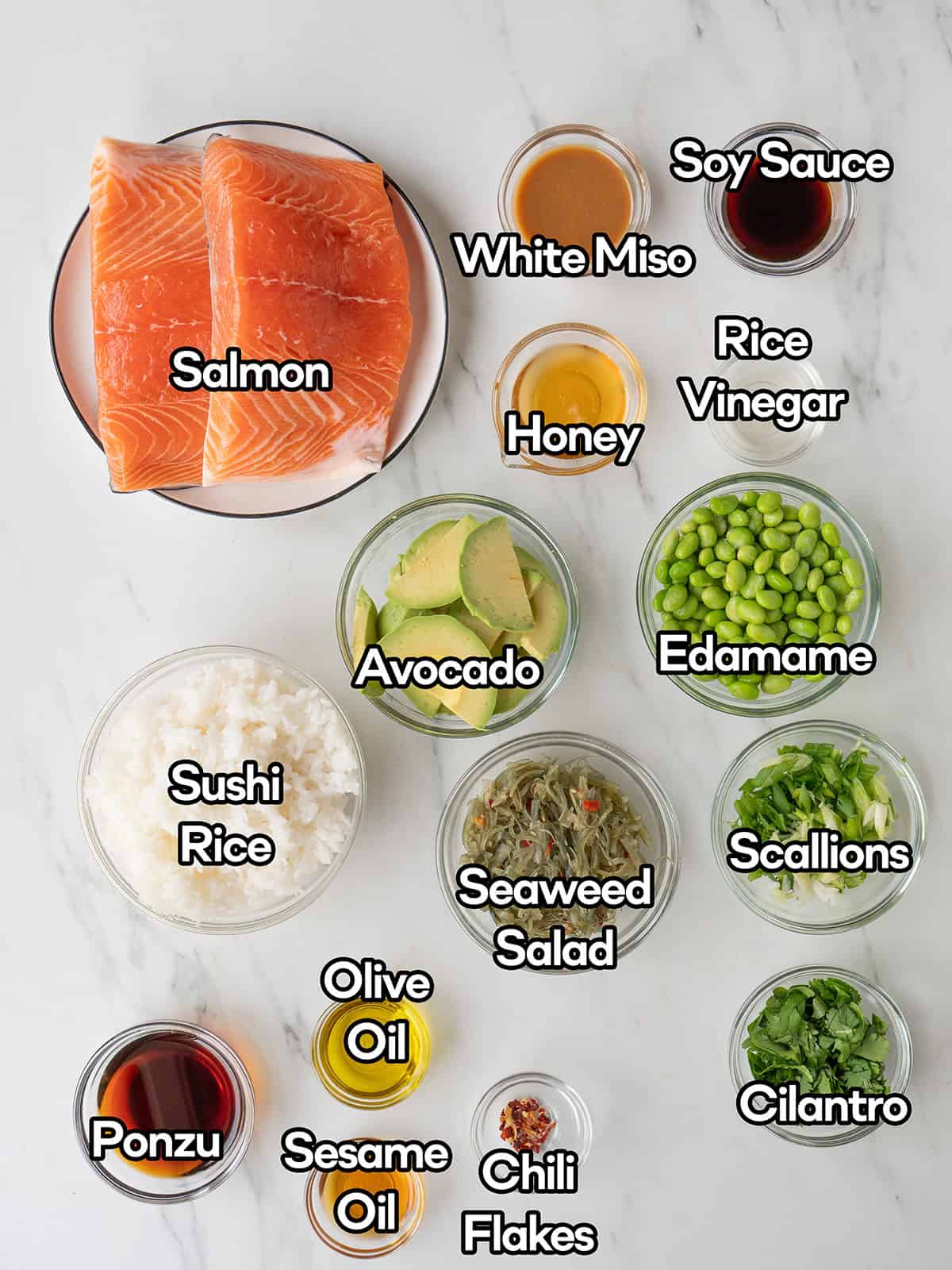
- 2 salmon fillets about 5 to 6 ounces each
- 2 tablespoon white miso paste
- 1 tablespoon soy sauce
- 1 tablespoon honey or maple
- 1 teaspoon rice vinegar
For the Bowls
- 2 cups cooked sushi rice
- 1 avocado sliced
- ½ cup shelled edamame thawed if frozen
- ½ cup seaweed salad
- 3 scallions sliced
- ¼ cup cilantro
Ponzu dressing
- 3 tablespoon ponzu
- 1 tablespoon olive oil
- 1 teaspoon sesame oil
- Pinch chili flakes optional
Instructions
- Preheat the oven to 400 degrees F. Line a small baking sheet with parchment paper.
- In a small bowl, whisk together the white miso, soy sauce, honey, and rice vinegar until smooth. Pat the salmon fillets dry with paper towels and spread the miso glaze evenly over the top and sides of each fillet. Let marinate for 10 to 15 minutes.
- Place the salmon on the prepared baking sheet and bake for 8 to 10 minutes until the salmon is cooked through and the glaze is caramelized. For extra color, broil on high for the last 1 to 2 minutes, watching closely.
- While the salmon bakes, whisk together all the ponzu dressing ingredients in a small bowl. Set aside.
- Divide the warm sushi rice between two bowls. Top each bowl with a salmon fillet, sliced avocado, edamame, seaweed salad, scallions, and cilantro. Drizzle the ponzu dressing generously over each Miso Salmon Bowl and serve immediately.
Notes
- Pat the salmon completely dry before spreading on the miso marinade. Excess moisture on the surface of the fish will dilute the miso glaze and prevent it from caramelizing properly during cooking. A dry surface means better adhesion and a more flavorful crust.
- Use white miso, not red or brown, for this glaze. White miso has a milder, sweeter flavor profile with lower salt content, which keeps the glaze from turning bitter or overly salty when it hits the heat of the oven or pan. Red miso will overpower every other component in the bowl.
- Do not marinate the salmon for longer than 30 minutes. Miso is high in salt, and extended contact will begin to cure the exterior of the fish, changing its texture to something mealy and dense rather than silky and flaky. Ten to fifteen minutes is the sweet spot.
- If pan searing, use a combination of olive oil and a tiny bit of butter in the pan. The butter accelerates browning on the miso-coated surface through the Maillard reaction and adds a richness that pure olive oil cannot replicate. Keep the heat at medium-high and do not move the salmon once it hits the pan.
- Spread the cooked sushi rice in a wide, shallow bowl to cool slightly before assembling. Piling hot rice directly under cold toppings like avocado and seaweed salad will cause the avocado to oxidize faster and make the seaweed salad go limp almost immediately. A couple of minutes of cooling makes a noticeable difference.
- Slice the avocado right before serving, not in advance. Avocado begins oxidizing and turning brown within minutes of being cut. If you are meal prepping, store the avocado half uncut with the pit in, wrapped tightly in plastic wrap, and slice it fresh at assembly time.
- Whisk the ponzu dressing with sesame oil last, just before drizzling. Sesame oil loses its aromatic punch quickly once agitated and mixed. Adding it at the last moment ensures the nutty, toasted fragrance is at full strength when it hits the bowl.
- Warm the edamame briefly in a dry skillet or the microwave before adding it to the bowl. Cold edamame pulled straight from the freezer or refrigerator creates a jarring temperature contrast against the warm rice and freshly cooked salmon. A quick 60 seconds of heat brings everything into harmony.
- Slice scallions on a sharp bias rather than straight across. A bias cut creates a longer, more elegant piece that holds its shape under the ponzu dressing and adds a visual layering effect to the bowl. Straight rounds tend to sink and disappear into the other toppings.




This sounds so flavorful and quick! Perfect for a quick dinner.