
If you have been sleeping on focaccia, Ratatouille Focaccia is the recipe that is going to change things. We are talking pillowy, olive-oil-soaked dough piled with zucchini, eggplant, bell peppers, tomatoes, and a shower of Parmesan. It is the kind of bake that looks impressive but asks very little of you, which is my love language. The vegetables are the star, and if you are already obsessed with summer produce, you are going to want to make my Grilled Eggplant Panzanella and this Zucchini Pasta. If you want to turn this focaccia into a full spread, pair it with my a Peach Tomato Caprese and call it a day.
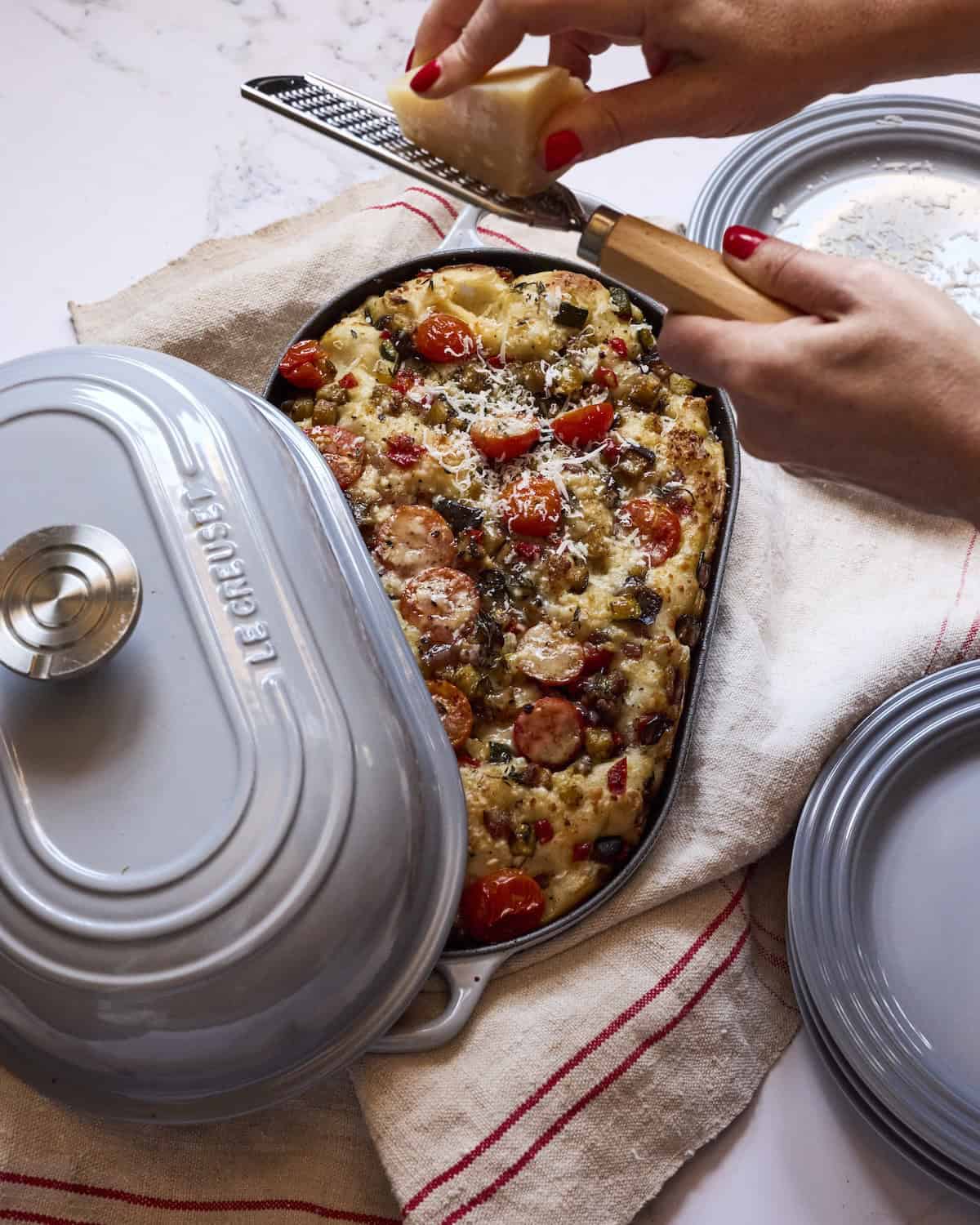
Ratatouille Focaccia at a Glance
- 🕒 Total Time: 10 hours 55 minutes
- 👪 Servings: 16 people
- 🍝 Cuisine Type: Mediterranean
- 🧂 Flavor Profile: Pillowy, olive-oil-rich focaccia with savory Parmesan baked into every layer, topped with caramelized zucchini, eggplant, bell pepper, and onion, blistered cherry tomatoes, and fragrant fresh thyme.
- 📖 Dietary Info: Vegetarian, contains gluten and dairy
- 📦 Storage Notes: Store leftover focaccia wrapped tightly or in an airtight container at room temperature for up to 2 days, or refrigerate for up to 4 days and rewarm in the oven before serving.
- ⭐ Why You'll Love It: This is the bread project that looks wildly impressive but only asks about thirty minutes of your actual time. The ratatouille vegetables caramelize and nestle right into the dough during the second rise, so every single bite has that gorgeous roasted vegetable situation going on. Parmesan goes into the dough AND on top, which means savory, cheesy richness from the inside out. It is the kind of bread that stops a room and earns compliments every single time you bring it somewhere.
Summarize and save this content on
Why I Love This Recipe
There are very few things in this world that smell as good as this Ratatouille Focaccia baking in the oven. The olive oil crisping around the edges, the cheese getting golden and bubbling on top, the thyme releasing into the bread as it bakes. It's one of the best things that can happen in a kitchen and I want it to happen in your kitchen as soon as possible.
The ratatouille topping is what takes this from a great focaccia to something wildly unforgettable. Zucchini, eggplant, red bell pepper, and red onion get roasted until tender and starting to caramelize at the edges, then scattered across the dough before the second rise so they nestle into the surface rather than just sitting on top.
Cherry tomatoes go on right before baking so they blister and burst in the oven and release their juice into the bread below. The Parmesan situation is also a real vibe. Mixed directly into the dough AND showered generously on top before the lid goes on, it adds a savory richness in every single layer of this loaf. This is the bread I bring to dinner parties, serve at brunch, and put out with good olive oil as an appetizer, and it earns a ridiculous amount of compliments every single time. Serve it alongside my Marinated Tomato and Burrata Salad and my The Best Summer Gazpacho for a summer spread that is completely and utterly unbeatable.
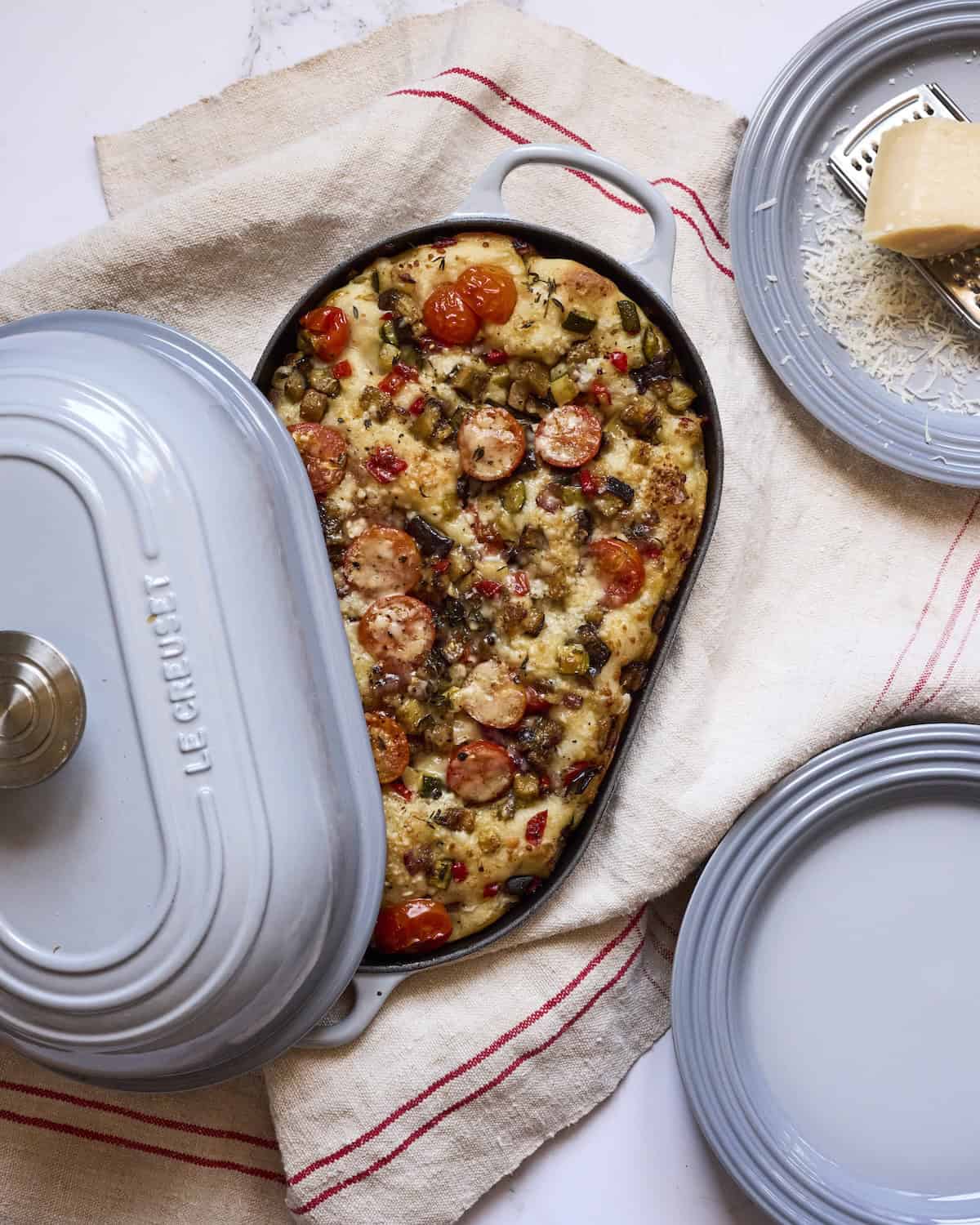
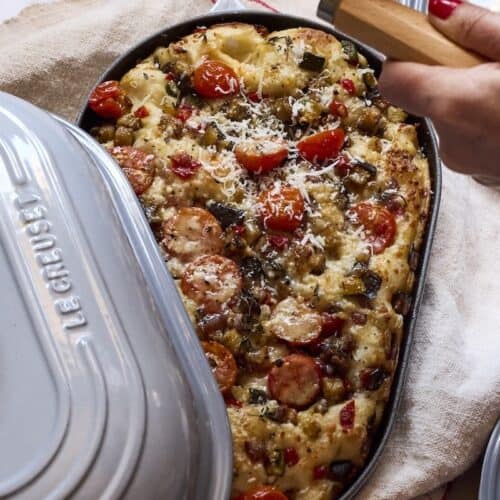
Also if you're a consistent bread baker, you need this Bread Oven (pictured in Chateau) - its perfection and the lid is so helpful!
Jump to:
Ingredients
- 1 envelope active dry yeast
- 3 teaspoon granulated sugar
- 2.5 cups water warmed to 115 degrees F
- 630 grams bread flour (I'm sorry but yes you need to weigh it)
- 1.5 tablespoon kosher salt
- 6 tablespoon extra-virgin olive oil divided, plus more for hands
- 1.25 cups freshly grated Parmesan
- ½ teaspoon freshly cracked black pepper
For the Ratatouille
- 1 zucchini small dice
- 1 eggplant small dice
- 1 red bell pepper small dice
- ½ red onion small dice
- 3 cloves garlic minced
- 3 tablespoon extra virgin olive oil
- 1 cup cherry tomatoes halved
- 1 teaspoon fresh thyme leaves
- Flaky sea salt
Substitutions & Swaps
🍞 Bread Flour
- All-purpose flour - Works in a pinch but produces a slightly less chewy crumb since the lower protein content (around 11 percent versus 13 percent in bread flour) builds less gluten structure. Expect a softer, more cake-like focaccia rather than the classic pillowy-but-toothsome texture.
- 00 flour - Italian milled 00 flour gives the dough an exceptionally silky texture and bakes up with a delicate, tender crumb. It hydrates quickly and is worth using if you want a slightly more refined, restaurant-quality finish on the interior.
- Half bread flour, half all-purpose flour - A 50/50 blend is a solid middle-ground swap if you run short on bread flour. You still get meaningful gluten development from the bread flour portion while the all-purpose keeps the crumb from getting overly dense or chewy.
🧀 Parmesan
- Pecorino Romano - Sharper, saltier, and more assertive than Parmesan, Pecorino Romano melts into the dough with a slightly funky depth that pairs beautifully with roasted eggplant and zucchini. Pull back slightly on the kosher salt in the dough if you go this route.
- Aged Asiago - Aged Asiago has a nutty, buttery flavor profile that is mellower than Parmesan but still adds serious savory richness both inside the dough and on top. It melts and browns in a very similar way so the visual result is nearly identical.
- Grana Padano - A slightly milder and less expensive cousin to Parmigiano-Reggiano, Grana Padano works as a 1-for-1 swap without any adjustments. It grates and melts the same way and contributes that essential umami backbone throughout every layer of the bread.
- Gruyere - If you want the topping to get extra melty and pull-apart gooey rather than forming a crisp Parmesan crust, freshly grated Gruyere is your move. It has a nutty, slightly sweet flavor that plays well with the thyme and roasted vegetables.
🥒 Ratatouille Vegetables
- Yellow summer squash - A direct swap for zucchini with nearly identical texture and water content. The slightly sweeter, more golden flesh adds a subtle color variation across the topping that looks beautiful baked into the focaccia surface.
- Japanese eggplant - Smaller and more tender than standard globe eggplant with thinner skin and fewer seeds, Japanese eggplant roasts faster and produces a silkier, less bitter result. It holds its small dice shape particularly well during the roasting step.
- Yellow or orange bell pepper - Sweeter than red bell pepper with a fruitier finish, yellow or orange bell pepper is an easy 1-for-1 color swap that caramelizes just as beautifully at high heat and adds a slightly different visual pop across the top of the loaf.
- Shallots - If red onion feels too sharp or pungent for your preference, shallots roast down into something deeply sweet and jammy with a more delicate allium flavor. Use two to three shallots in place of the half red onion for comparable volume.
- Fennel - Thinly sliced fennel roasted until tender and starting to caramelize at the edges brings a subtle anise note that is exceptional with thyme and olive oil. It softens and sweetens dramatically in the oven and adds an unexpected but very Provencal dimension to the ratatouille topping.
🌿 Fresh Thyme
- Fresh rosemary - Rosemary is the most classic focaccia herb for a reason. Its piney, resinous oils release into the olive oil as the bread bakes and perfume the entire loaf. Chop it finely so no one gets a sharp woody piece and use about the same amount as the thyme.
- Fresh oregano - More intensely savory and slightly floral compared to thyme, fresh oregano is a natural pairing with roasted Mediterranean vegetables. It wilts into the surface of the bread beautifully and leans into the Italian-French hybrid spirit of the whole recipe.
- Fresh basil (added after baking) - Basil cannot go into the oven or it turns black and bitter, but torn fresh leaves scattered across the hot focaccia the moment it comes out of the oven are extraordinary. The residual heat blooms the oils without destroying the flavor or color.
- Dried thyme - If fresh thyme is unavailable, dried thyme works as a backup using roughly one-third the volume (about one-third teaspoon). Rub it briefly between your palms before scattering it over the dough to wake up the volatile oils before they go into the oven.
🫧 Active Dry Yeast
- Instant yeast - Instant yeast (also labeled rapid-rise or bread machine yeast) can substitute 1-for-1 and does not require the five-minute bloom in warm water. You can mix it directly into the dry flour, though blooming it first as directed still works and gives you a visual confirmation the yeast is alive.
- Fresh yeast (cake yeast) - Fresh yeast produces an exceptionally lively, complex fermentation and is worth seeking out from a specialty grocery or bakery. Use about twice the amount called for (roughly two small cakes or 25 grams) and crumble it directly into the warm water with the sugar.
- Sourdough starter (discard method) - An active bubbly sourdough starter can replace the commercial yeast for a more complex, tangy flavor that pairs remarkably well with the roasted vegetables and Parmesan. Use about 150 grams of active starter, reduce water slightly, and expect a longer, slower cold fermentation. This is an advanced swap but the flavor payoff is exceptional.
Tips & Tricks for the Best Ratatouille Focaccia
- Check your yeast before you commit. After whisking the yeast, sugar, and warm water together, cover it and wait five minutes. It should look bubbly and alive. If nothing is happening, your yeast is dead and your dough will not rise. Start over. Life is too short for sad yeast.
- 115 degrees F is the sweet spot for the water. Too cold and the yeast will not activate. Too hot and you will kill it. Use an instant-read thermometer to check the water temperature before adding the yeast. This step is not optional if you want reliable results.
- Do not overmix the dough. Stir just until the flour is incorporated and the dough looks shaggy and wet. Overmixing develops gluten too aggressively at this stage and can make the finished focaccia tough rather than pillowy and airy.
- The overnight cold rise is the move. Eight to twenty-four hours in the fridge develops flavor in a way that a quick room-temperature rise simply cannot replicate. The bread will taste more complex, have better texture, and be significantly easier to work with. Plan ahead and you will be rewarded.
- Make the ratatouille a day ahead. It roasts in 20 to 25 minutes and the vegetables get even better after sitting overnight. Having them ready means the day of assembly is effortless and relaxed.
- Oil your hands generously, every time. Focaccia dough is sticky and wet, which is exactly what makes it so light and airy when baked. Oiled hands rather than floured hands keep that moisture in the dough rather than adding flour that changes the texture.
- Do not rush the second rise. Two hours might feel like a long time but the dough needs that full rise to develop those beautiful air pockets and that signature pillowy texture. A rushed second rise gives you denser bread.
- Dimple aggressively. When it is time to dimple the dough, press your oiled fingers all the way down almost to the bottom of the pan. These indentations trap olive oil, create those iconic focaccia craters, and are part of what makes the bread so incredibly good. Do not be timid about it.
- The lid finish is everything. After the first fifteen minutes of baking with the lid off, that last ten minutes covered is what steams the interior fully and ensures the bread is cooked all the way through without over-browning the top. Do not skip this step.
- Let the Ratatouille Focaccia rest before cutting. Fifteen minutes of rest after coming out of the oven allows the interior crumb to set properly. Cutting into it immediately will give you a gummy interior even if the outside looks perfect.
FAQ's
Can I make this Ratatouille Focaccia without the overnight rise?
The overnight cold rise is strongly recommended for both flavor and texture. If you are short on time, a minimum of 8 hours is needed. You can push it to a room-temperature rise of about 2 to 3 hours, but the flavor will be noticeably less developed.
Can I make this Ratatouille Focaccia in a regular baking pan?
Yes. A well-oiled 9x13 metal baking pan works beautifully for focaccia. The cooking method stays the same. A dark metal pan will give you a crispier bottom crust, which is a very good thing.
Can I use all-purpose flour instead of bread flour?
You can but bread flour gives you a chewier, more structured crumb with better rise. All-purpose will work and still produce a delicious focaccia, just slightly less chewy in texture.
Can I make the ratatouille filling with different vegetables?
Absolutely. This recipe is incredibly flexible on the vegetable front. Fennel, asparagus, mushrooms, or any summer squash variety all roast beautifully and work wonderfully as a topping. Use whatever looks best at the market.
Can I freeze the Ratatouille Focaccia?
Yes. Let it cool completely, slice it, and freeze in an airtight bag for up to 2 months. Reheat slices in a 350 degree F oven for about 10 minutes until warmed through and the edges are crispy again.
What should I serve Ratatouille Focaccia with?
Ratatouille focaccia is incredible on its own with a dish of good olive oil for dipping. It is also wonderful alongside soup, as part of a cheese board, or cut into squares as an appetizer. Leftovers make an extraordinary sandwich base the next day.

Ratatouille Focaccia
Ingredients
- 1 envelope active dry yeast
- 3 teaspoon granulated sugar
- 2.5 cups water warmed to 115 degrees F
- 630 grams bread flour (I'm sorry but yes you need to weigh it)
- 1.5 tablespoon kosher salt
- 6 tablespoon extra-virgin olive oil divided, plus more for hands
- 1.25 cups freshly grated Parmesan
- ½ teaspoon freshly cracked black pepper
For the Ratatouille
- 1 zucchini small dice
- 1 eggplant small dice
- 1 red bell pepper small dice
- ½ red onion small dice
- 3 cloves garlic minced
- 3 tablespoon extra virgin olive oil
- 1 cup cherry tomatoes halved
- 1 teaspoon fresh thyme leaves
- Flaky sea salt
Instructions
Make the Dough
- In a medium bowl, whisk together the yeast and sugar. Add the warm water and whisk to combine. Cover with a kitchen towel and let the yeast bloom for 5 minutes. The mixture should look bubbly and alive. If it does not, toss it and start over. Life is too short for sad yeast.
- In a large separate bowl, whisk together the flour and salt. Add the flour mixture to the yeast mixture and stir until a wet, shaggy dough forms and no flour remains. Do not overmix.
- Coat a large bowl with 1 tablespoon of the olive oil. Transfer the dough into the bowl and turn to coat. Cover with a lightly greased piece of plastic wrap and refrigerate for at least 8 hours or up to 24. The dough should double in size.
Make the Ratatouille
- While the dough does its thing, preheat the oven to 425 degrees F. Toss the zucchini, eggplant, bell pepper, onion and garlic with 3 Tbsp. olive oil on a sheet pan or large baking dish. Spread into a single layer and roast until tender and caramelized at the edges, tossing once, 20 to 25 minutes. Let cool completely. This can absolutely be done a day ahead.
Assemble
- Remove the dough from the fridge and let it sit at room temperature for 20 minutes
- Use the remaining 4 tablespoons of olive oil to coat two bread pans or baking vessels generously.
- With oiled hands, gently punch down the dough, then gather the edges toward the center, rotating the bowl as you go. Turn the dough over and divide it in half. Transfer each half to a prepared pan.
- Gently guide the dough toward the corners but do not force it. It will relax and stretch more easily as the second rise gets going.
- Scatter about a third of the roasted ratatouille vegetables over the surface of each loaf, pressing gently so they nestle in without deflating the dough too much. Cover loosely with a kitchen towel and let rise in a warm place until doubled, about 2 hours.
Bake
- Preheat the oven to 450 degrees F with the rack in the center position.
- With oiled fingers, dimple the focaccia all over the surface, pressing almost all the way through the dough.
- Scatter the remaining roasted ratatouille vegetables and all the cherry tomatoes over the top of both loaves. Sprinkle with 1 cup of the Parmesan, the black pepper, fresh thyme, and a generous pinch of flaky sea salt.
- Transfer to the oven and bake until puffed and the cheese is golden brown, about 15 minutes.
- Remove from the oven, drizzle each loaf with a tablespoon of olive oil, sprinkle with the remaining ¼ cup of Parmesan, and cover with the lid of the bread oven. Return to the oven and bake until the focaccia is fully cooked through, about 10 minutes more.
- Remove from the oven and let rest for 15 minutes. Rip and serve warm with good olive oil for dipping.





⭐⭐⭐⭐⭐ Absolute showstopper of a recipe!
Made this on back-to-back dinner party nights (since the recipe makes two loaves)....AND WOW!!!!
If you want a bake that makes your entire house smell like an absolute dream and completely stops people in their tracks, this is it. The dough gets so pillowy and olive-oil-crispy, and baking those caramelized ratatouille veggies right into the top (plus that insane Parmesan situation inside and out) takes ordinary focaccia and turns it into a total masterpiece.
It looks like you spent all day in a professional Italian bakery. Absolute perfection from start to finish—gonna be making this on repeat!! 🍅🌿✨
If I don’t have the bread oven and I’m using a 13 x 9 pan, do I cover with foil when you say to cover with the lid or just let it keep baking?
cover with foil IF it is getting a bit too dark.
Can you make this in a 9x13 pan. I don’t have a bread pan! How to adjust?
yes that is a bigger surface area so likely you wouldn't have to split the dough in half, just do it entirely in a 9x13 and keep your eyes on baking time.
An you make this pizza dough
you sure can - I would do it in a cookie sheet pan and make a sheet pan pizza!