
A peak Summer Gazpacho is the cold soup that completely changed my entire relationship with cold soup, and I say that as someone who once looked at a bowl of gazpacho in culinary school and thought, wtf. This is the gazpacho recipe that stands at the opposite end of the spectrum from every sad, thin, flavorless cup of it you have ever encountered, and the difference between the two comes down to exactly one thing: ripe tomatoes. If you are in full summer produce mode with me right now, my Marinated Tomato and Burrata Salad, my Cherry and Peach Panzanella, and my Peach Tomato Caprese are all equally obsession-worthy right now.
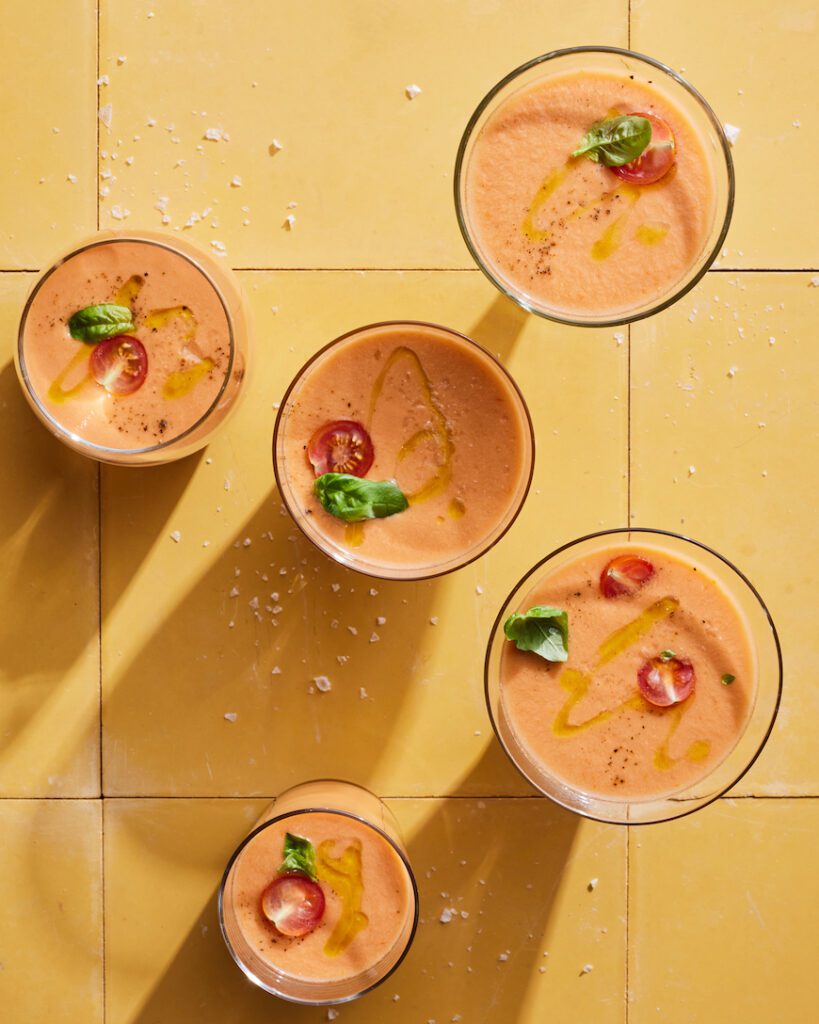
The Best Summer Gazpacho at a Glance
- 🕒 Total Time: 6 hours 10 minutes
- 👪 Servings: 4 people
- 🍝 Cuisine Type: Spanish
- 🧂 Flavor Profile: Bright, tangy, and deeply savory with the fresh sweetness of ripe summer tomatoes, crisp cucumber, and a silky smooth texture from a generous drizzle of good-quality olive oil.
- 📖 Dietary Info: Naturally gluten-free, vegan, and dairy-free.
- 📦 Storage Notes: Store gazpacho in a sealed container in the refrigerator for up to 4 days, giving it a good stir and tasting for seasoning before serving.
- ⭐ Why You'll Love It: This is the cold soup that completely changed my mind about cold soup. It is refreshing, flavor-packed, and honestly one of the easiest things you will make all summer long. The key is using the ripest, most gorgeous farmers market tomatoes you can find and letting everything chill overnight so the flavors really come together. Once you try it on a hot day, you will completely understand why this has been one of the most requested recipes all season.
Summarize and save this content on
Why I Love This Recipe
Let me tell you about the first time I had gazpacho, because it is a very important story. I was in culinary school and my instructor announced we were making cold soup. I was immediately skeptical. Like truly skeptical. It just wasn't on my radar. And then I tasted it. Peak summer in Los Angeles, about 100 degrees outside, and suddenly a cold, silky, tomato-forward soup felt like the greatest idea anyone had ever had. Mind blown. Obsessed ever since.
That said, I have rules about gazpacho. Strict ones. Mid gazpacho is one of the sadder food experiences you can have. Watery, pale, vaguely vegetable-flavored cold liquid is not it. And it is so easy to end up there if you are not paying attention to two things: your tomatoes and your olive oil. The tomatoes need to be ripe, fragrant, and ideally from the farmers market or at the very least, they should SMELL like a tomato. If a tomato does not smell like summer when you hold it to your nose, it will not taste like summer in your bowl.
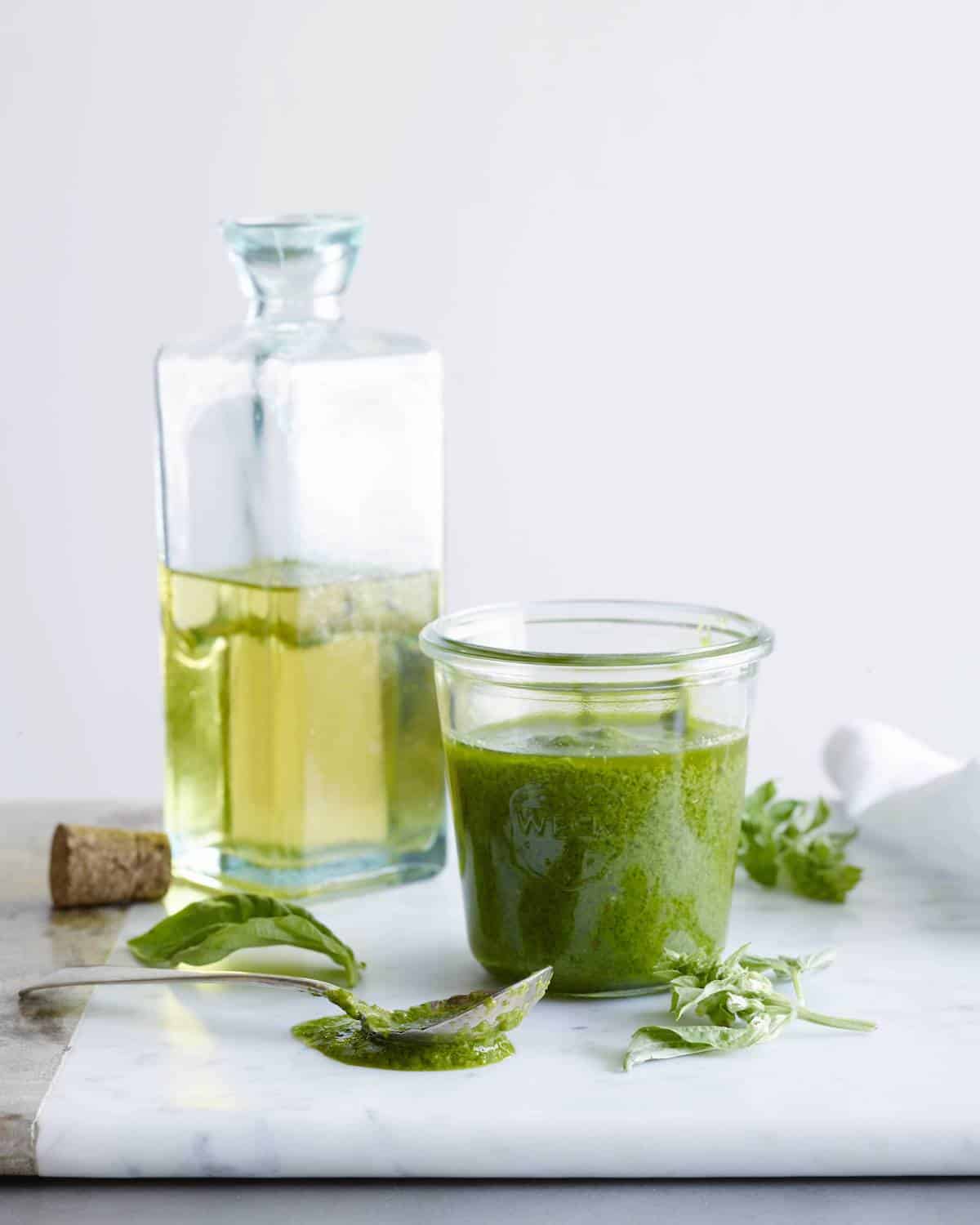
Same goes for the olive oil. There is half a cup of it in this soup, which means it is a primary flavor component, not a background player. Use something you would happily put on bread and the whole soup is elevated. Follow these two rules and you get the kind of gazpacho that makes people ask you for the recipe. Serve this at your next dinner party alongside my Late Summer Dinner Party Menu and alongside a cold glass of my Classic Pimm's Cup and you will have the most effortless, elegant summer starter you have ever served.
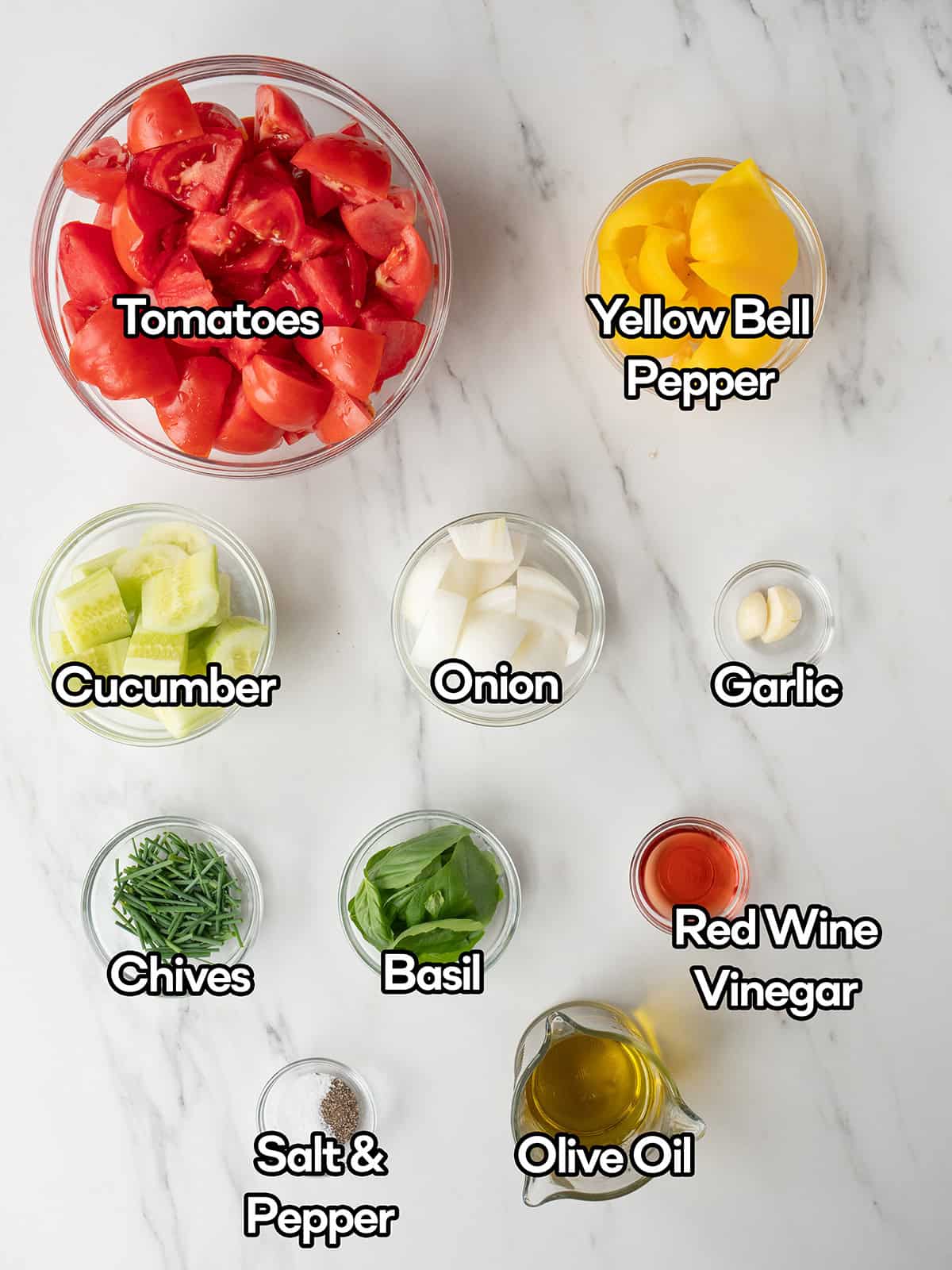
Ingredients
Substitutions & Swaps
🍅 Tomatoes
- Heirloom tomatoes - A mix of heirloom varieties brings layered sweetness and acidity that a single varietal cannot match. Cherokee Purple and Brandywine together make an especially complex base.
- Vine-ripened tomatoes - Left on the vine longer, these develop the natural sugars and deep tomato fragrance that are non-negotiable for a good gazpacho. Still a step above grocery store rounds.
- Yellow or orange tomatoes - Swapping to all yellow or orange tomatoes gives you a sweeter, less acidic gazpacho with a gorgeous golden color. Pairs beautifully with the yellow bell pepper already in the recipe.
🫑 Bell Pepper
- Red bell pepper - Riper and sweeter than yellow, red bell pepper deepens the color and adds a slightly jammy, roasted-fruit sweetness that balances the tomato acidity perfectly.
- Cubanelle pepper - Thinner-walled and more delicate than a standard bell pepper, Cubanelle brings a fresh, slightly grassy flavor without any bitterness. Common in Spanish cooking and a natural fit here.
- Jalapeno (added alongside the bell pepper) - Even half a seeded jalapeno introduces a gentle heat that makes every other flavor sharper and more awake. Gaby mentions this one in the post, and it is genuinely a great move.
- Anaheim pepper - Mild enough to stay in the background but with a subtle earthiness that adds dimension. Good choice if you want complexity without any spice.
🥒 Cucumber
- Persian cucumbers - Thinner skin and virtually no seeds mean you skip peeling and get a cleaner, crisper flavor with less bitterness than a standard English cucumber.
- Armenian cucumber - Exceptionally high water content and an almost floral, mild flavor. Produces a gazpacho that is silky and light without tasting watered down.
- Kirby cucumber - Firm, dense flesh holds up in the blender and contributes a slightly more pronounced cucumber flavor. A solid farmers market find in peak summer.
🫙 Red Wine Vinegar
- Sherry vinegar - The classic Spanish choice for gazpacho. Aged and nutty with a rounder acidity than red wine vinegar. It integrates into the soup rather than sitting on top of it.
- Champagne vinegar - Lighter and more delicate, champagne vinegar lets the tomato and vegetable flavors stay front and center. Best when your tomatoes are already very acidic on their own.
- Fresh lemon juice - Adds brightness with a citrus note that lifts the whole soup. Use about the same amount as the vinegar and add a tiny pinch of zest for even more punch.
- White wine vinegar - Clean and straightforward acidity with no added color. A reliable backup when sherry vinegar is not in the pantry, and you want the gazpacho to stay bright and clear.
🌿 Fresh Herbs
- Fresh tarragon (in place of chives) - Tarragon has a subtle anise note that plays beautifully against ripe summer tomatoes. Use it sparingly, about half the amount called for with chives, so it enhances rather than dominates.
- Fresh flat-leaf parsley (in place of basil) - Parsley keeps the flavor clean and herby without the sweetness of basil. Good choice if your tomatoes are already very sweet and you need something more neutral to balance.
- Fresh mint (blended in with basil) - A few mint leaves blended in alongside the basil add a cooling, almost menthol freshness that is unexpected and genuinely delicious in a chilled soup.
- Green onion tops (in place of chives) - The green tops of scallions are essentially an interchangeable substitute for chives with a nearly identical mild onion flavor. Use them 1 to 1 without any adjustment.
How to Make The Best Summertime Gazpacho
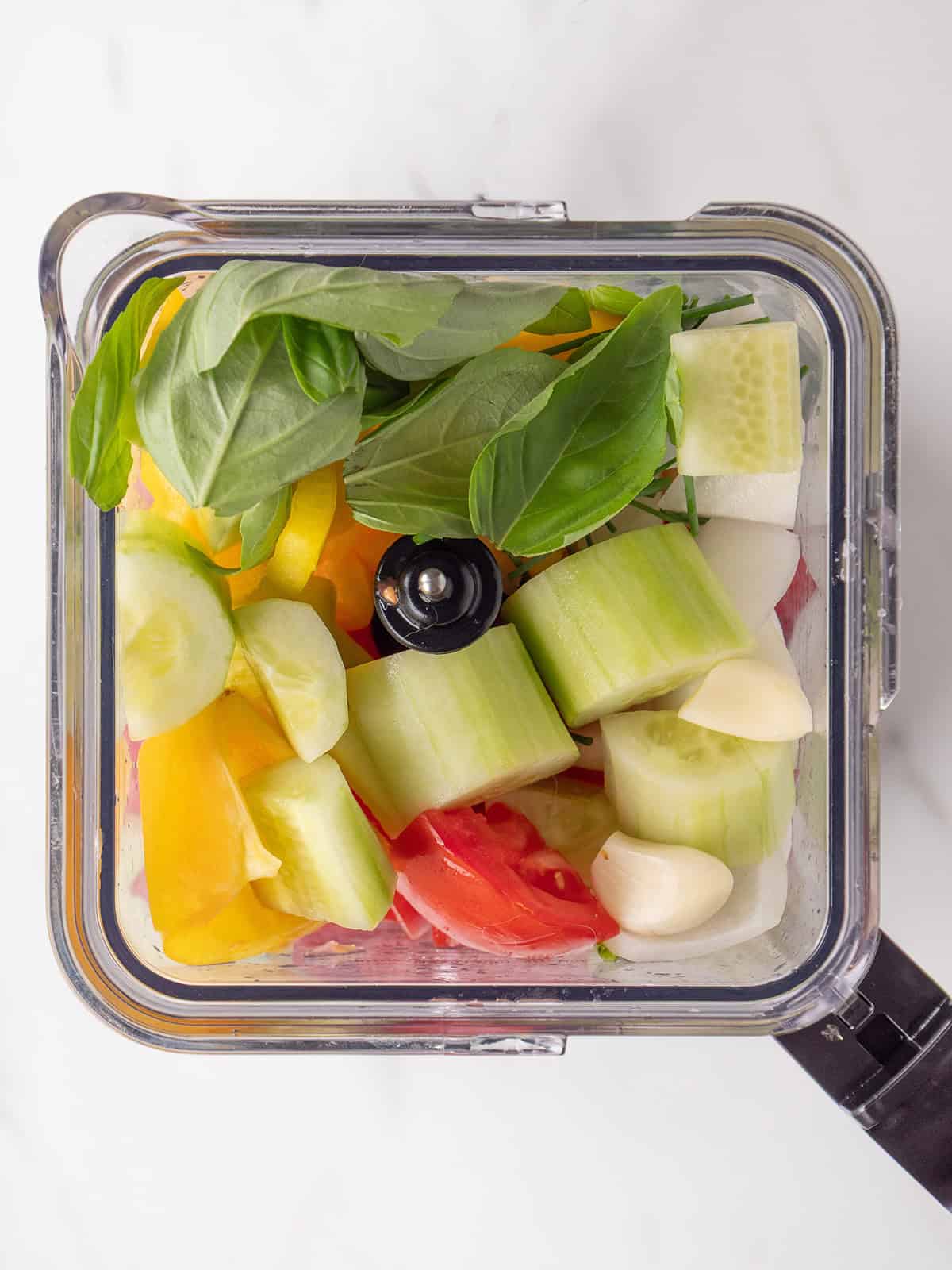
Step 1: In a blender, combine the tomatoes, pepper, cucumber, onion, garlic, chives, and basil. Blend on high speed until super smooth, at least 2 minutes. Scrape down the sides and blend for another minute.
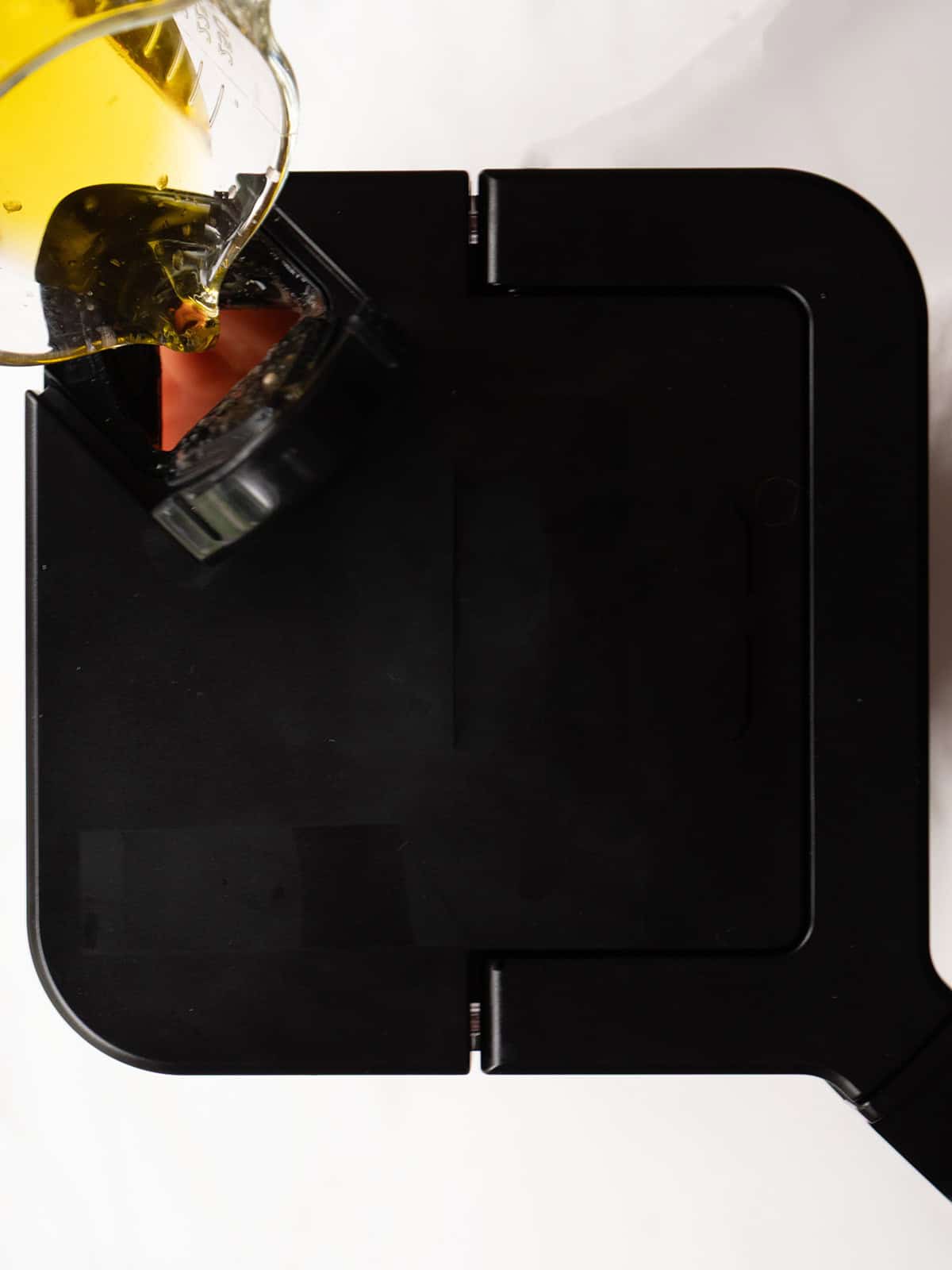
Step 2: While the blender is running, add the vinegar and season with a large pinch of salt. Drizzle in the olive oil, and the mixture will start to emulsify.
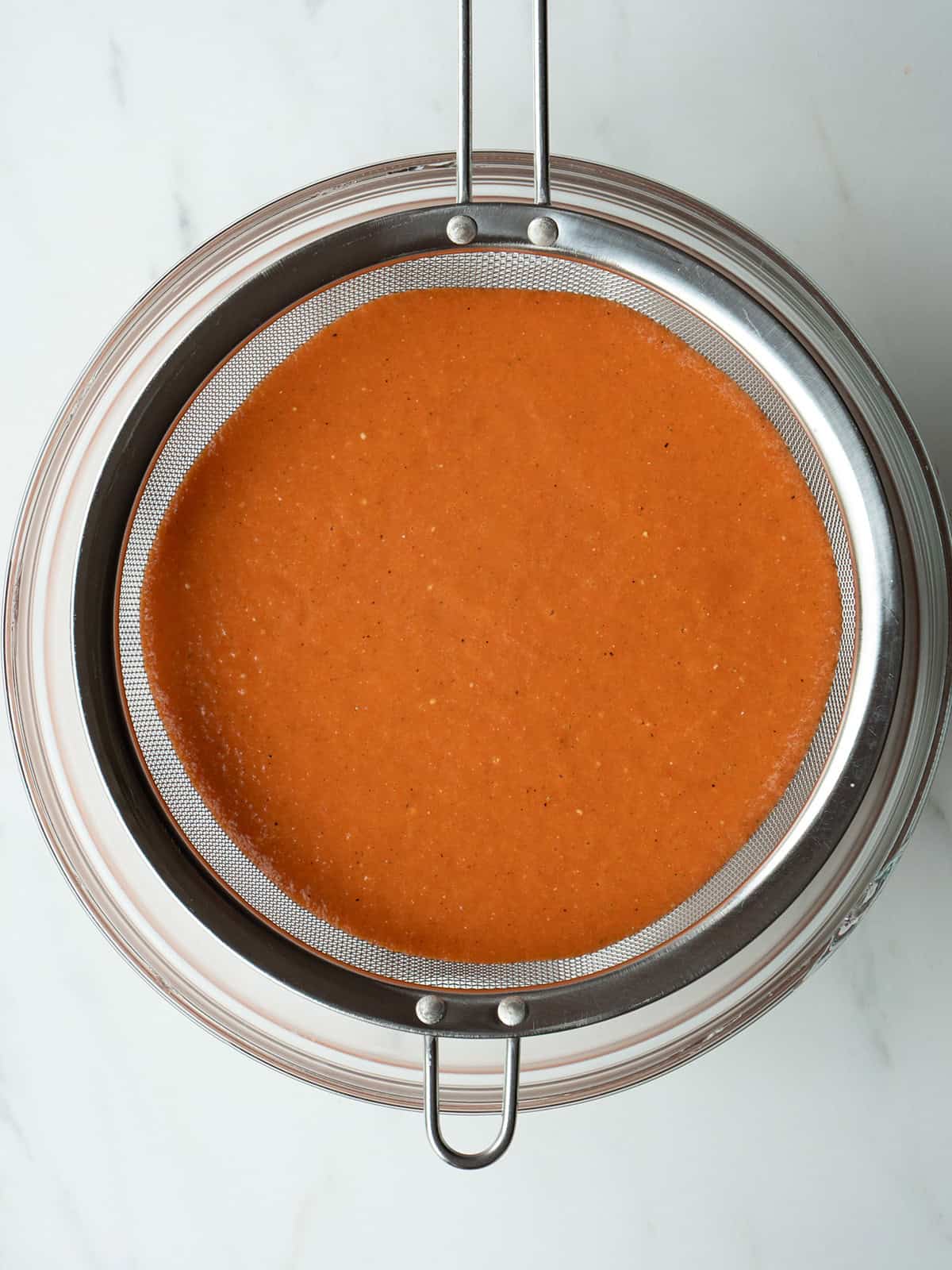
Step 3: Strain the mixture through a strainer and discard any solids that remain. Transfer to a large container and chill for at least 6 hours, overnight if possible.
Taste before serving and adjust the salt and vinegar. I love a little pepper, so I add some freshly cracked black pepper too.
🍅🥒🫙 Tips & Tricks for the Best Summer Gazpacho
Cold, silky, and packed with peak-summer flavor, this is the soup that will make you a gazpacho believer.
- Only make this when tomatoes are actually good. Gazpacho has nowhere to hide. Watery, pale, out-of-season tomatoes will produce a flat, disappointing soup no matter how much vinegar or salt you add. Farmers market tomatoes in peak summer are non-negotiable here.
- Smell your tomatoes before you buy them. A ripe tomato should smell intensely floral and sweet at the stem end. If there is no aroma, there will be no flavor. This single sniff test is the most reliable quality check you can do.
- Blend for a full three minutes, not just until smooth. Extended blending breaks down cell walls more completely and allows the olive oil to fully emulsify into the tomato water, giving you a silky, cohesive texture rather than a separated, watery soup.
- Stream the olive oil in while the blender is running. Adding oil slowly while blending creates a true emulsification, binding the fat with the vegetable liquid. Dumping it in all at once will leave you with oil pooling on top instead of a creamy, unified soup.
- Chill overnight, not just for an hour. The flavors in gazpacho sharpen and marry significantly between the six-hour and twenty-four-hour mark. A quick chill gives you cold soup. An overnight rest gives you something that actually tastes developed and intentional.
- Strain through a fine-mesh sieve. Even after thorough blending, tomato skins and seed casings leave fibrous bits that interrupt the texture. Straining takes two minutes and is the difference between a rustic blended salad and a proper, restaurant-quality gazpacho.
- Use an olive oil you would happily dip bread into. A half cup of olive oil is a primary flavor component in this recipe, not a background note. Anything bitter, rancid, or too grassy will dominate the finished soup in an unpleasant way.
- Add vinegar in small increments and taste after each addition. Red wine vinegar is the acidity backbone that lifts all the vegetable flavors, but a little too much tips the soup from bright to sharp and sour. Start with the two teaspoons called for, then adjust by a quarter teaspoon at a time after chilling.
- Season the soup again right before serving, after it has chilled. Cold temperatures dull your perception of salt and acidity. A soup that tasted perfectly seasoned warm will almost always need another pinch of salt and a small splash of vinegar once it comes straight from the refrigerator.
- Drizzle your best olive oil over each bowl at the table. A finishing drizzle of high-quality extra virgin olive oil adds a fresh, peppery top note that blended-in oil cannot replicate. It also adds visual richness and signals to your guests that this is a composed dish.
- Add a small piece of jalapeño if you want heat, not hot sauce. Hot sauce introduces its own vinegar and salt profile that can throw off the balance of the soup. A raw jalapeño blended with the vegetables gives you clean, fresh heat that integrates naturally with the other flavors.
The Best Summer Gazpacho FAQs
What is a summer gazpacho?
Summer gazpacho is a chilled Spanish soup made from raw, ripe tomatoes blended with cucumber, bell pepper, onion, garlic, olive oil, and vinegar. It requires no cooking, which makes it one of the most refreshing meals for hot weather. The result is a smooth, vibrant, cold soup that is served straight from the refrigerator, often with a drizzle of extra virgin olive oil on top.
Do the tomatoes really have to be ripe?
Yes, and this is non-negotiable. Tomatoes are the primary flavor in gazpacho, so rock-hard, out-of-season tomatoes will produce a flat, acidic soup with no depth. If a tomato does not smell like a ripe summer tomato at the farmers market or grocery store, skip it and wait. This recipe is worth making only when great tomatoes are available.
How long does gazpacho need to chill before serving?
Chill the gazpacho for at least 6 hours, but overnight produces the best results. The resting time allows the flavors from the tomatoes, garlic, herbs, and olive oil to fully marry. Taste again right before serving and adjust salt and red wine vinegar, since cold temperatures can slightly mute flavor.
Can you skip straining the gazpacho?
Straining is optional, but it produces a noticeably smoother, restaurant-quality texture by removing tomato skins and any fibrous vegetable solids. If you prefer a chunkier gazpacho, skip the strainer and instead blend for slightly less time, or fold in a small amount of finely diced cucumber or tomato after blending. Both approaches work; the texture is a personal preference.
What olive oil should you use in gazpacho?
Use a high-quality extra virgin olive oil that you genuinely enjoy drinking off a spoon. Because the olive oil is blended directly into the soup and drizzled on top, any bitterness or grassy harshness in a low-grade oil will come through in every sip. A smooth, fruity extra virgin olive oil is the right call here.
How long does gazpacho keep in the refrigerator?
Gazpacho keeps well in an airtight container in the refrigerator for up to 4 days. The flavor is often at its peak on day two, after the ingredients have had maximum time to meld. Stir or shake before serving since the olive oil can separate as it sits.

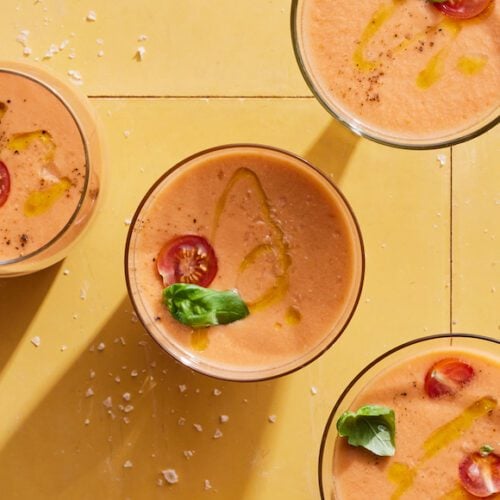
Summer Gazpacho
Ingredients
- 2 pounds RIPE red tomatoes (see note below) cored and roughly cut into chunks
- 1 yellow bell pepper cored, seeded and roughly cut into chunks
- 1 long hot house cucumber peeled and roughly cut into chunks (about 1 ½ cups worth)
- 1 small yellow onion peeled and roughly cut into chunks
- 2 cloves garlic peeled
- 2 tablespoons fresh chives, snipped
- 2 tablespoons fresh basil
- 2 teaspoons red wine vinegar plus more to taste
- kosher salt to taste and a little freshly cracked black pepper if you prefer
- ½ cup extra-virgin olive oil plus more to taste, and for drizzling
Instructions
- In a blender, combine the tomatoes, pepper, cucumber, onion, garlic, chives and basil. Blend on high speed until super smooth, at least 2 minutes. Scrape down the sides and blend for another minute.
- While the blender is running, add the vinegar and season with a large pinch of salt. Drizzle in the olive oil and the mixture will start to emulsify.
- Strain the mixture through a strainer and discard any solids that remain. Transfer to a large container and chill for at least 6 hours, overnight if possible.
- Taste before serving and adjust the salt and vinegar. I love a little pepper so I add some freshly cracked black pepper too.
Notes
- Only make this when tomatoes are actually good. Gazpacho has nowhere to hide. Watery, pale, out-of-season tomatoes will produce a flat, disappointing soup no matter how much vinegar or salt you add. Farmers market tomatoes in peak summer are non-negotiable here.
- Smell your tomatoes before you buy them. A ripe tomato should smell intensely floral and sweet at the stem end. If there is no aroma, there will be no flavor. This single sniff test is the most reliable quality check you can do.
- Blend for a full three minutes, not just until smooth. Extended blending breaks down cell walls more completely and allows the olive oil to fully emulsify into the tomato water, giving you a silky, cohesive texture rather than a separated, watery soup.
- Stream the olive oil in while the blender is running. Adding oil slowly while blending creates a true emulsification, binding the fat with the vegetable liquid. Dumping it in all at once will leave you with oil pooling on top instead of a creamy, unified soup.
- Chill overnight, not just for an hour. The flavors in gazpacho sharpen and marry significantly between the six-hour and twenty-four-hour mark. A quick chill gives you cold soup. An overnight rest gives you something that actually tastes developed and intentional.
- Strain through a fine-mesh sieve every single time. Even after thorough blending, tomato skins and seed casings leave fibrous bits that interrupt the texture. Straining takes two minutes and is the difference between a rustic blended salad and a proper, restaurant-quality gazpacho.
- Use an olive oil you would happily dip bread into. A half cup of olive oil is a primary flavor component in this recipe, not a background note. Anything bitter, rancid, or too grassy will dominate the finished soup in an unpleasant way.
- Add vinegar in small increments and taste after each addition. Red wine vinegar is the acidity backbone that lifts all the vegetable flavors, but a little too much tips the soup from bright to sharp and sour. Start with the two teaspoons called for, then adjust by a quarter teaspoon at a time after chilling.
- Season the soup again right before serving, after it has chilled. Cold temperatures dull your perception of salt and acidity. A soup that tasted perfectly seasoned warm will almost always need another pinch of salt and a small splash of vinegar once it comes straight from the refrigerator.
- Drizzle your best olive oil over each bowl at the table. A finishing drizzle of high-quality extra virgin olive oil adds a fresh, peppery top note that blended-in oil cannot replicate. It also adds visual richness and signals to your guests that this is a composed dish.
- Add a small piece of jalapeño if you want heat, not hot sauce. Hot sauce introduces its own vinegar and salt profile that can throw off the balance of the soup. A raw jalapeño blended with the vegetables gives you clean, fresh heat that integrates naturally with the other flavors.
- Chill your serving bowls in the freezer for fifteen minutes before ladling. Gazpacho warms up quickly once it leaves the refrigerator, especially in summer heat. Ice-cold bowls keep the soup at its ideal temperature through the entire time it takes to eat, which is the whole point of a chilled soup.






Living in Los Angeles too, Gazpacho is one of my favorite summer dishes and having a backyard veggie garden means I almost always have the ingredients needed. I prefer the complexity of using Sherry Vinegar for the acid and depending upon the month, I'll add a handful of pitted cherries, cubed watermelon, green or red grapes or honeydew to the mix. The fruits add a whole different note that is delicious and refreshing. Gazpacho is one of those perfect summer soups!
You have two recipes for Summer Gazpacho; one uses a yellow bell pepper, the other an Anaheim pepper. Which recipe do you prefer?
I only have 1!!
Oh my, I LOVE Gazpacho, but have never made it. This will inspire me to do so!!!
I love gazpacho! You can also make a white gazpacho (had it at Jose Andres' Jaleo in DC years ago, SO FLIPPING GOOD), and I have an old NY Times recipe for chilled cucumber soup that is delicious.
It is truly a great recipe - similar to Julia Moskin's, published several years ago in the New York Times.
Looks great! Question, it says the tomatoes should be cored....does that mean remove the center, seeds and skin??
I definitely plan to make this soup! Can you recommend a good suitable olive please? Thank you Gaby.
YES, will add a link within the post right now!