
If you're a Prime Rib family for the holidays, look no further. This Perfect Reverse Sear Prime Rib Recipe is exactly what you want on your table. If you love a great steak, my Grilled Rib Eye Steak is another showstopper. Serve this one with The Best Mashed Potatoes and Herb Cheese Popovers for the ultimate holiday dinner.
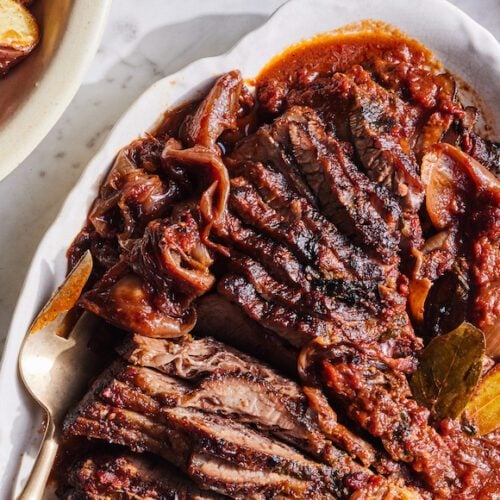
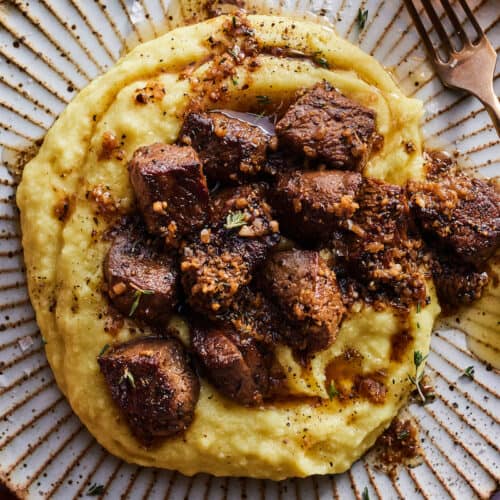
Looking for other impressive main dishes - try my Garlic Peppercorn Crusted Beef Tenderloin, Garlic Red Wine Braised Short Ribs with Creme Fraiche Mash or Thyme and Garlic Brisket!
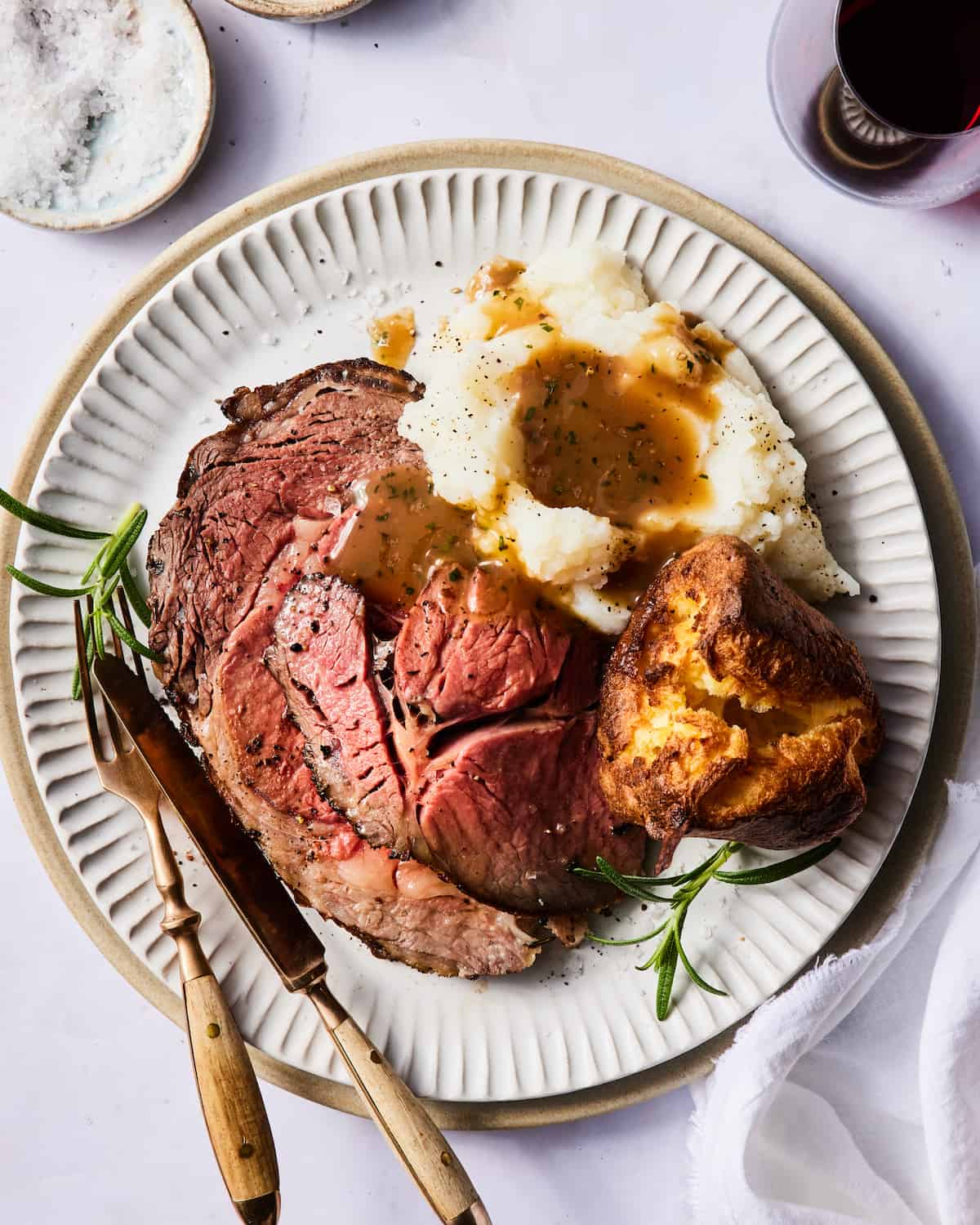
The Perfect Reverse Sear Prime Rib Recipe at a Glance
- 🕒 Total Time: ~3 hours (slow roast + rest + high-heat sear)
- 👪 Servings: 8–10
- 🍝 Cuisine Type: American / Holiday Main
- 🧂 Flavor Profile: Herb-rubbed prime rib with a deep beefy flavor, ultra-tender interior, and a perfectly browned crust from the final sear
- 📖 Dietary Info: Naturally gluten-free; contains no dairy unless butter is added to the rub
- 📦 Storage Notes: Store leftovers tightly wrapped for 3–4 days; reheat gently to maintain tenderness; excellent sliced cold for sandwiches
- ⭐ Why You’ll Love It: The reverse-sear method guarantees even cooking, a juicy center, and a restaurant-level crust , making it the most foolproof and impressive way to serve prime rib.
Why I Love This Recipe
If you have my Take It Easy cookbook, you know I'm obsessed with a reserved seared steak. It's the most trusted way to get a perfectly cooked piece of meat. And for YEARS (almost a decade at this point) you guys have been asking me to do a prime rib recipe for Christmas. So naturally, the smartest thing to do was to combine both of these into the perfect prime rib.
If you're not familiar with a reserve sear - here's what you need to know. Most steaks are cooked on the grill or in a cast-iron pan. Obviously that is delish but a reserve sear is the most accurate way to cook meat. It involves cooking the meat to perfection on a very low heat in the oven with an internal meat thermometer to tell you exactly when the meat reaches your desired doneness. From there the steak is seared on a cast-iron skillet to create a delightful crust that gives you the perfect crunch while the inside is moist and tender. It's absolute perfection.
Keep these internal temperatures in mind when you're deciding how long to cook your prime rib in the oven. Take note, that seared on the cast iron will raise the internal temp a few degrees. I always aim for 115 when I take it out of the oven, then allow it to rest and then do the sear.
- 115-120˚F for rare
- 125-130˚F for medium rare
- 135-140° F for medium
- 145-150 F° for medium well
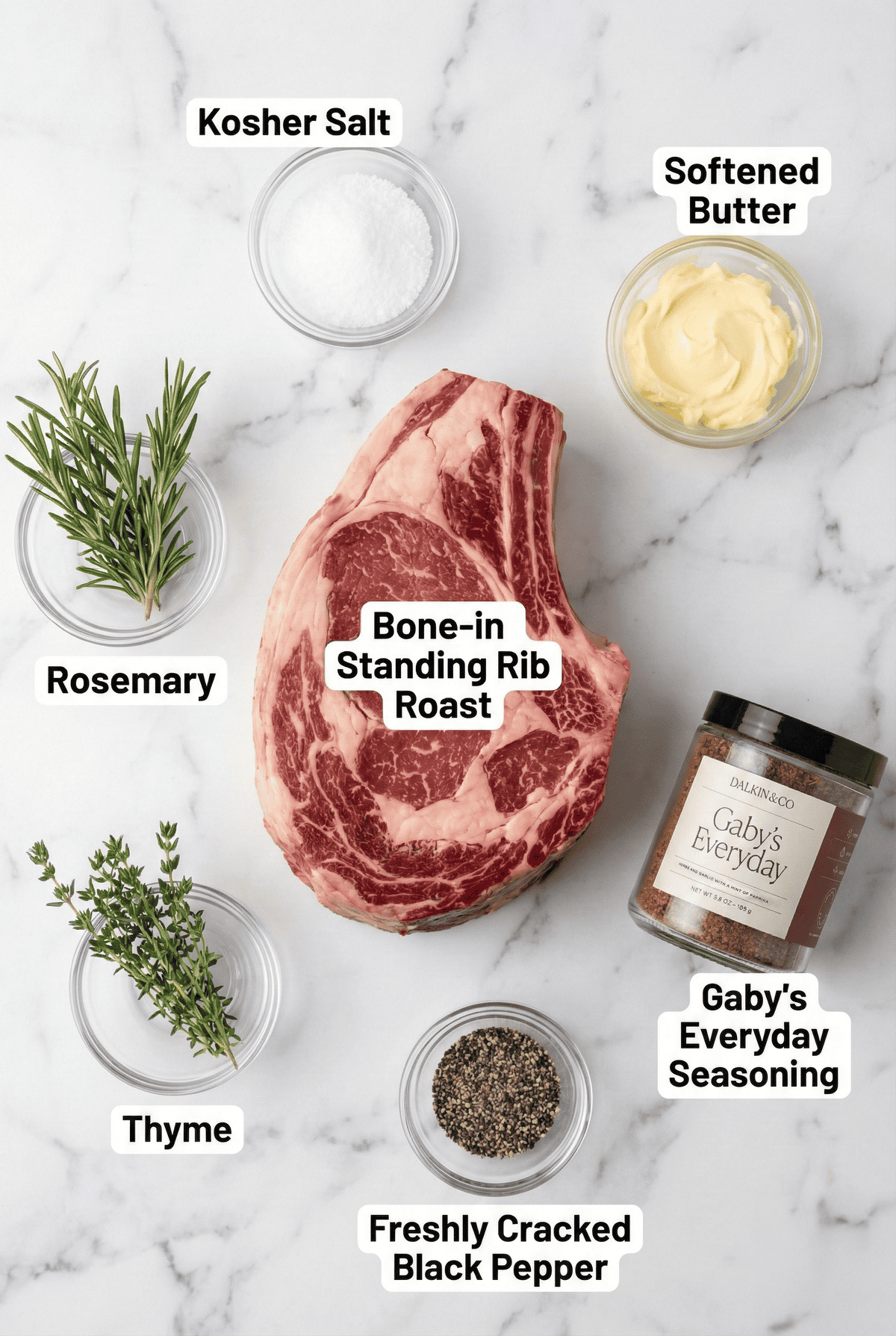
Ingredients
Substitutions
🥩 Beef + Protein Swaps
- Ribeye roast (bone-in or boneless) — the traditional pick for that rich, marbled flavor.
- Beef tenderloin — leaner, more delicate, cooks faster.
- Tri-tip or sirloin roast — budget-friendly but still flavorful with the same rub.
- Strip loin roast (New York roast) — perfect if you want a bit less fat but the same wow factor.
- Pork loin or lamb leg — both work beautifully with the garlic-herb seasoning.
🌿 Herb + Seasoning Variations
- Thyme, rosemary, sage, or oregano — any combo of woody herbs works wonders.
- Garlic confit or roasted garlic — mellower, deeper flavor than raw garlic.
- Horseradish + Dijon crust — for a sharp, savory edge.
- Add citrus zest (lemon or orange) — to cut through the richness.
- Gaby's Everyday - or your favorite everyday seasoning blend if you don't have it!
🧈 Fat + Flavor Base
- Butter — classic, rich, and perfect for basting.
- Olive oil — lighter but still delicious.
- Ghee or beef tallow — ideal for high-heat searing and incredible crust flavor.
- Compound butter — mix butter with garlic, herbs, and pepper to melt over the top when serving.
🔥 Cooking Method Swaps
- Reverse sear in oven + cast iron sear — Gaby’s go-to method for perfect doneness and crust.
- Grill or smoker — adds smoky depth while keeping that juicy interior.
- Sous vide — for exact temperature control, then sear before serving.
🍷 Sauce + Finishing Options
- Red wine reduction or au jus — classic pairing.
- Creamy horseradish sauce — a sharp, cool contrast to the rich beef.
- Garlic herb butter — melt over slices for instant flavor boost.
- Balsamic glaze or port wine jus — adds sweetness and shine.
- Mushroom gravy — hearty and full of umami.
🍽 Serving Pairings
Try it with:
How to Make
- Season roast generously with kosher salt. Cover loosely with plastic wrap and refrigerate overnight.
- Remove the roast from the refrigerator and allow it to come to room temperature and preheat the oven to 200 degrees F.
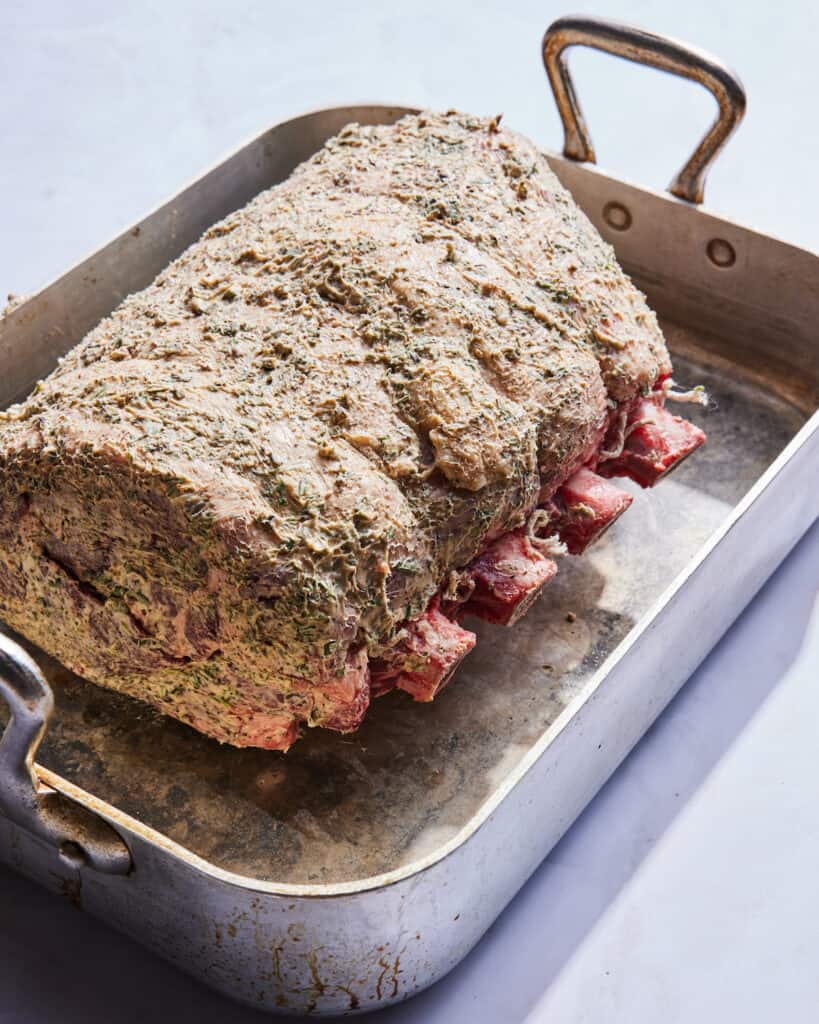
- Mix the butter, rosemary, thyme, seasoning and black pepper together in a small bowl. Slather the butter mixture over roast and place roast in a large roasting pan.
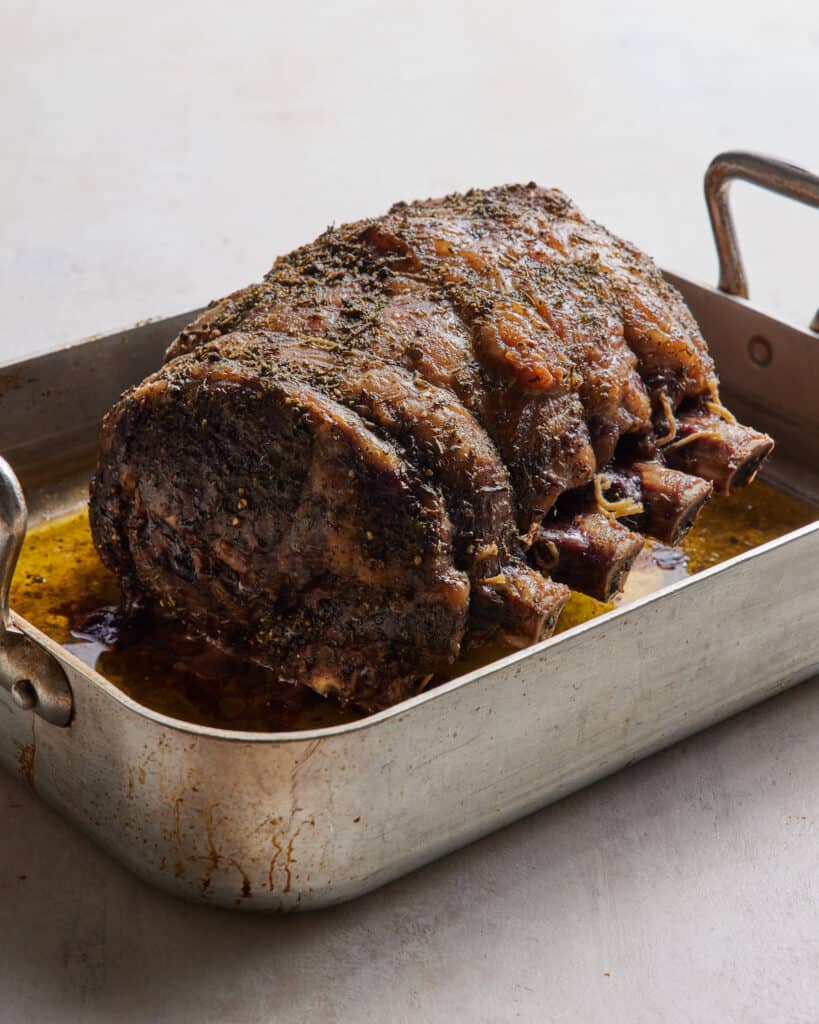
- Transfer the roast to a preheated oven and roast until the internal temperature reaches 115 degrees F for medium-rare, about 3 ½-4 hours. Remove from the oven and tent with aluminum foil; allow to rest, about 20 minutes.
- Meanwhile, heat a large cast iron skillet over high heat. Carefully transfer the roast into the cast iron once hot and sear on all sides for 1-2 minutes until there is a nice sear.
- Remove from the cast iron skillet and let rest for another 3-5 minutes. Remove the ribs and slice into ⅓ inch thick pieces and serve.
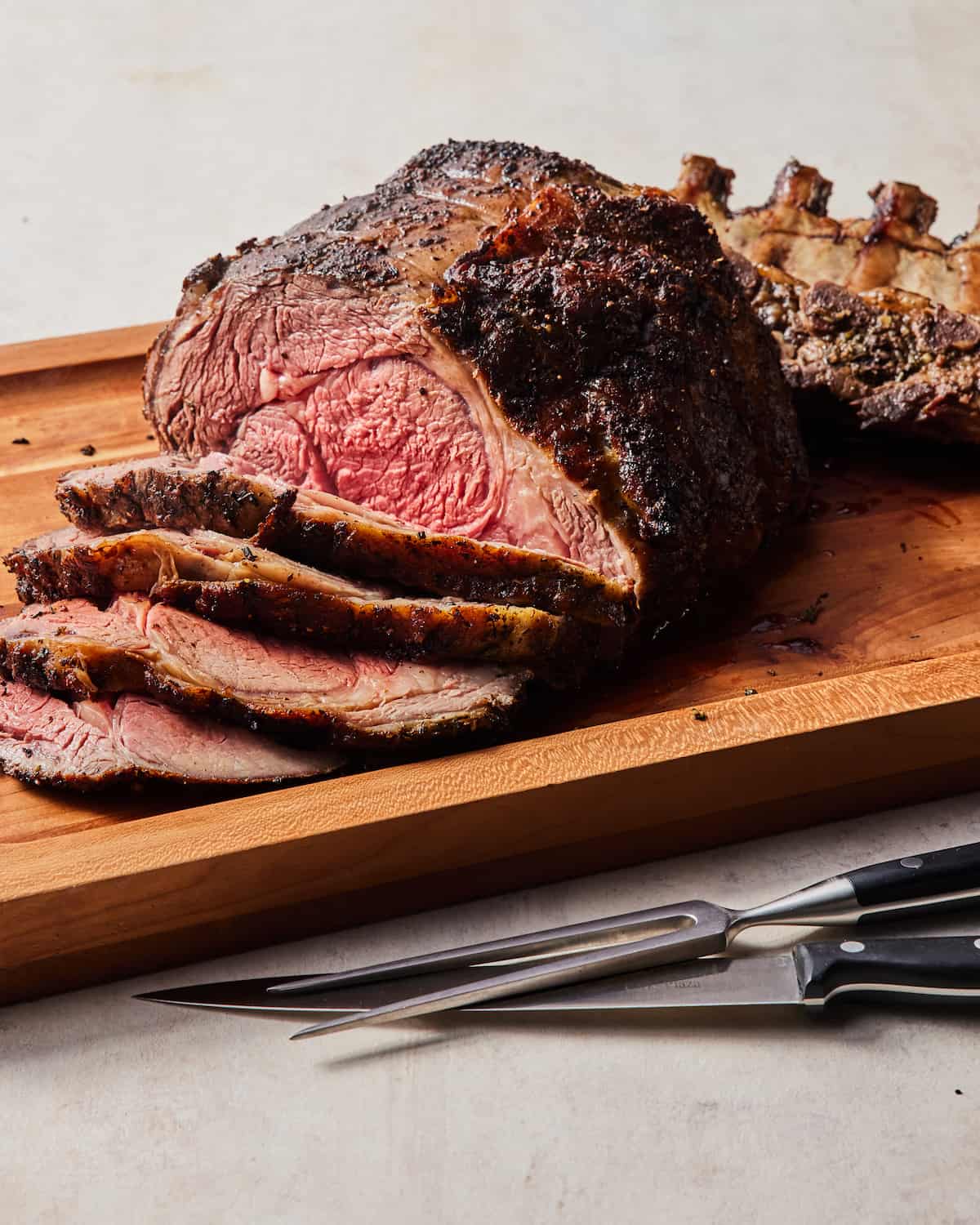
🥩🔥✨ 11 Tips + Tricks for the Best Reverse Sear Prime Rib
- Let the roast come to room temp. Pull it out of the fridge 1–2 hours before roasting. This helps the prime rib cook evenly and gives you that tender, edge-to-edge rosy center.
- Season aggressively. Prime rib is a big cut — it needs more salt, pepper, garlic, and herbs than you think. Season every side and don’t forget the ends.
- Use a wire rack. Elevating the roast allows hot air to circulate so it cooks evenly and the fat renders instead of steaming on the bottom.
- Low and slow is the move. Reverse searing means gently roasting at a low temperature first. This gives you perfect doneness throughout instead of a bullseye of overcooked meat.
- A meat thermometer is non-negotiable. Pull the roast when it hits your target: about 118–120° F for medium rare (it will rise 5–10 degrees while resting). Guessing is how you ruin holiday dinners.
- Rest before searing. Let the roast chill out (literally) for 20–30 minutes before searing. A cooler exterior browns faster without overcooking the inside.
- Sear at very high heat. Whether you finish in a hot oven or a blazing cast-iron skillet, you want that deep golden crust. This is the flavor moment — don’t rush it.
- Slice against the grain. Carving the roast the right direction keeps each bite tender instead of stringy. Take your time — this is your holiday hero dish.
- Save the drippings. A quick pan sauce or au jus made from the drippings takes this from incredible to legendary. Prime rib loves a rich, savory sauce.
- Serve on a warm platter. Warm plates keep your slices juicy and luxurious instead of cooling too fast. It makes a big difference with a premium cut like this.
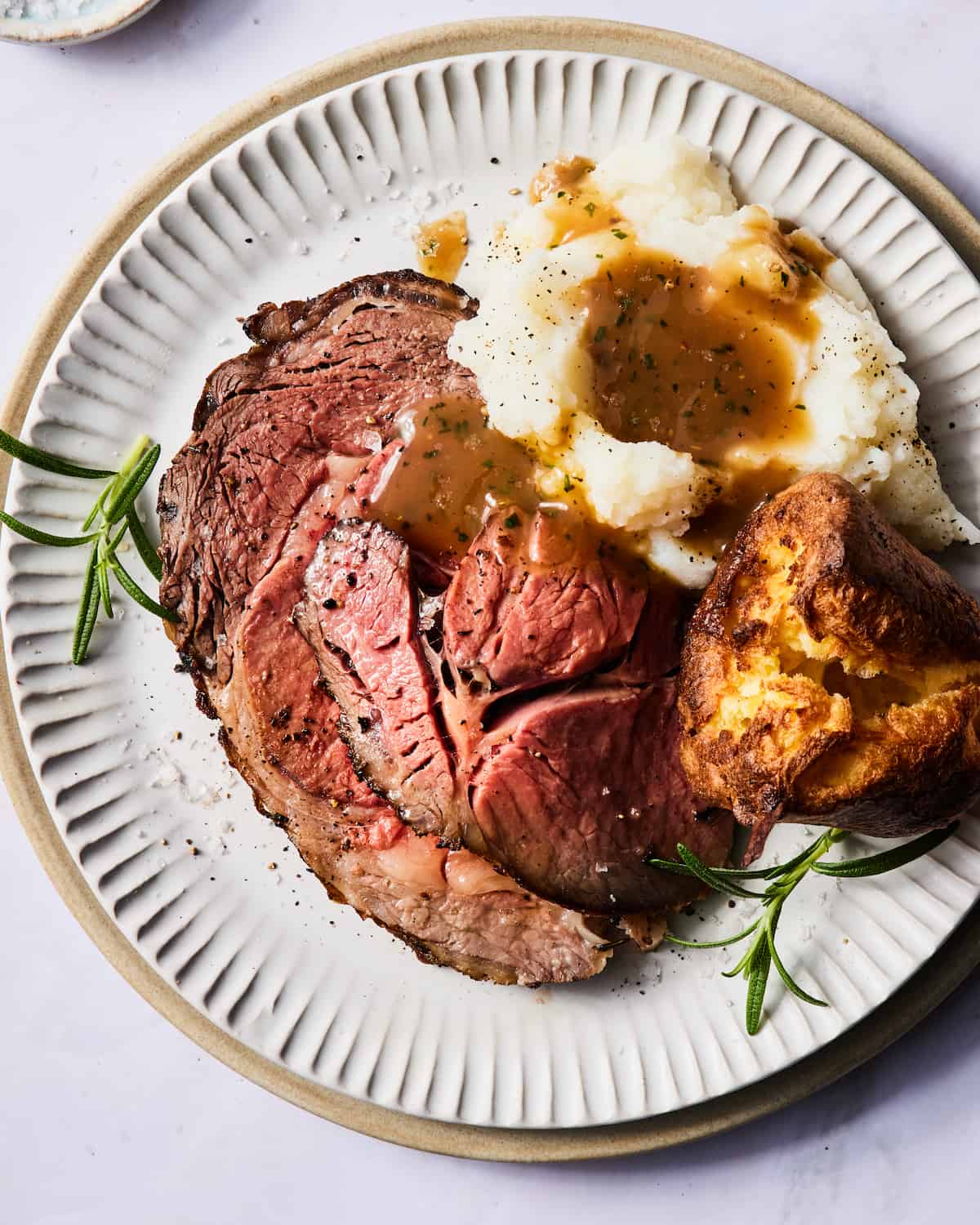
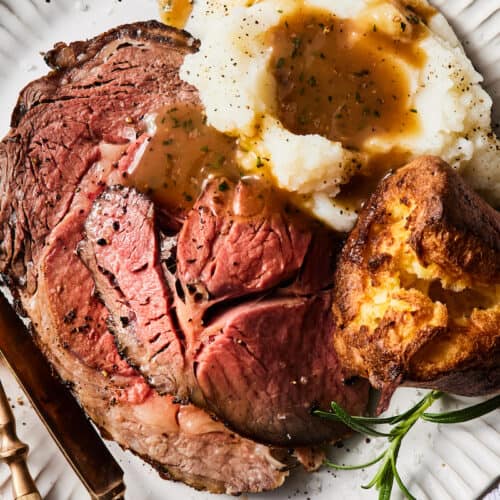
- When it comes time to serve - I serve this with mashed potatoes, gravy and a popover! The gravy can be made with the drippings from the prime rib reverse sear!
FAQ's
How long does it take to cook prime rib?
Cooking time for prime rib depends on the weight of the meat. Use a meat thermometer to ensure it reaches an internal temperature of 115°F for rare and then remember to let it rest for about 15-20 minutes before searing and then carving.
What temperature should prime rib be cooked to?
For a reverse sear, you're going with a low and slow method. The prime rib is cooked at 200 degrees F and then finished on the cast iron.
What can you do with leftover prime rib?
Make prime rib sandwiches, use it for beef tacos, slice it thin for a steak salad, or repurpose it for beef stroganoff.
How much prime rib do I need?
It is recommended to plan for around ⅓ pound (or 5 ounces) of prime rib per person.
What are the best dishes to server with Prime Rib?
Here are some popular side dishes to serve with Prime Rib:
Creamy Mashed Potatoes
Roasted Vegetables
Yorkshire Pudding / Popovers
Creamed Spinach
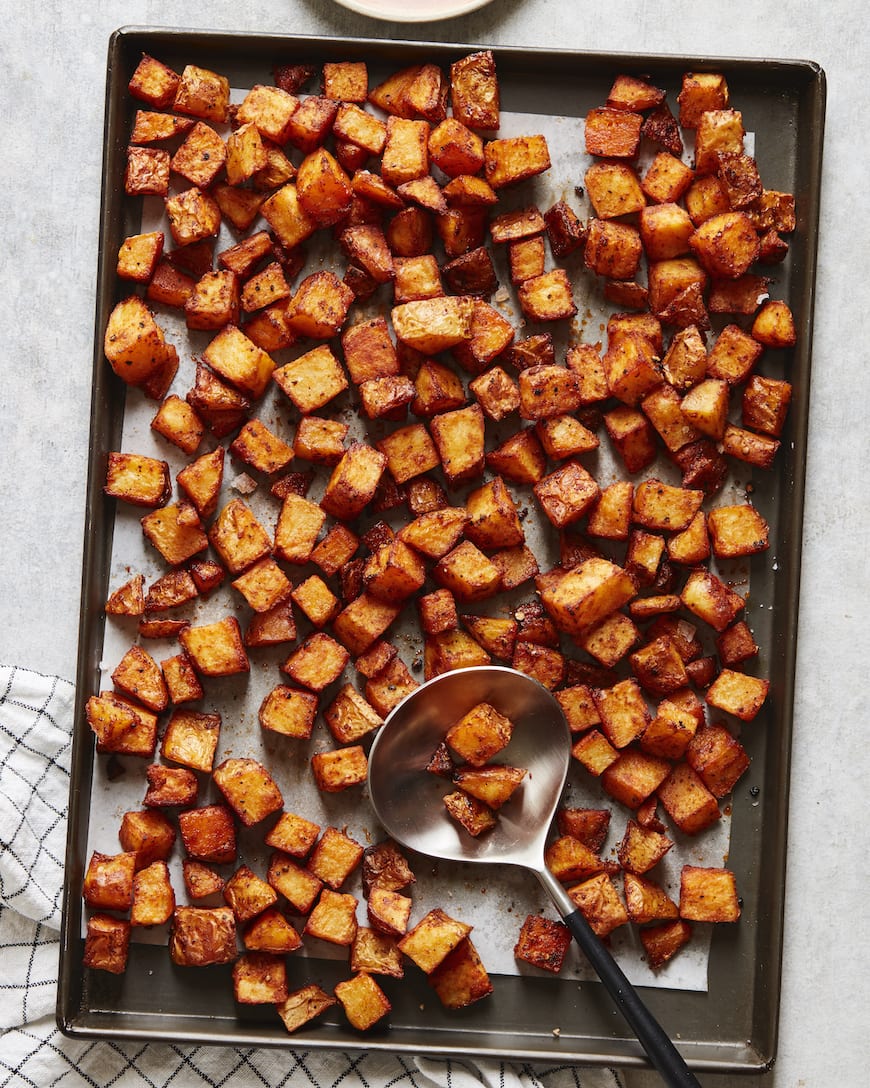
Roasted Potatoes
Winter Greens Salad
Baked Mac and Cheese
Choose the ones that suit your preferences and enjoy your meal!
Similar Recipes
Reverse Sear Prime Rib Recipe
Ingredients
- 10 pound bone-in standing rib roast
- 2 tablespoons kosher salt
- ½ cup butter, softened
- 2 tablespoons finely chopped fresh rosemary
- 2 tablespoons finely chopped fresh thyme
- 1-2 tablespoons Gaby's Everyday Seasoning
- Freshly cracked black pepper
Instructions
- Season roast generously with kosher salt. Cover loosely with plastic wrap and refrigerate overnight.
- Remove the roast from the refrigerator and allow it to come to room temperature and preheat the oven (or smoker) to 200 degrees F.
- Mix the butter, rosemary, thyme, seasoning and black pepper together in a small bowl. Slather the butter mixture over roast and place roast in a large roasting pan.
- Transfer the roast to a preheated oven (or smoker) and roast until the internal temperature reaches 115 degrees F for medium-rare, about 3 ½-4 hours. Remove from the oven and tent with aluminum foil; allow to rest, about 20 minutes.
- Meanwhile, heat a large cast iron skillet over high heat. Carefully transfer the roast into the cast iron once hot and sear on all sides for 1-2 minutes until there is a nice sear.
- Remove from the cast iron skillet and let rest for another 3-5 minutes. Remove the ribs and slice into ½ inch thick pieces and serve.
Notes
- Let the roast come to room temp. Pull it out of the fridge 1–2 hours before roasting. This helps the prime rib cook evenly and gives you that tender, edge-to-edge rosy center.
- Season aggressively. Prime rib is a big cut — it needs more salt, pepper, garlic, and herbs than you think. Season every side and don’t forget the ends.
- Use a wire rack. Elevating the roast allows hot air to circulate so it cooks evenly and the fat renders instead of steaming on the bottom.
- Low and slow is the move. Reverse searing means gently roasting at a low temperature first. This gives you perfect doneness throughout instead of a bullseye of overcooked meat.
- A meat thermometer is non-negotiable. Pull the roast when it hits your target: about 118–120° F for medium rare (it will rise 5–10 degrees while resting). Guessing is how you ruin holiday dinners.
- Rest before searing. Let the roast chill out (literally) for 20–30 minutes before searing. A cooler exterior browns faster without overcooking the inside.
- Sear at very high heat. Whether you finish in a hot oven or a blazing cast-iron skillet, you want that deep golden crust. This is the flavor moment — don’t rush it.
- Slice against the grain. Carving the roast the right direction keeps each bite tender instead of stringy. Take your time — this is your holiday hero dish.
- Save the drippings. A quick pan sauce or au jus made from the drippings takes this from incredible to legendary. Prime rib loves a rich, savory sauce.
- Serve on a warm platter. Warm plates keep your slices juicy and luxurious instead of cooling too fast. It makes a big difference with a premium cut like this.
- When it comes time to serve - I serve this with mashed potatoes, gravy and a popover! The gravy can be made with the drippings from the prime rib reverse sear!


I have a question about tempting your roast. I see so many articles saying 6 or more hours while others say max 2 hours. What is the temp time for an 11 lb prime rib roast? Is there a mathematical formulas to calculate this hy chance?
We had done a rib roast many different ways for Christmas - until I found this recipe and will never deviate. We even featured it in our church's Advent magazine along with a photo shoot - crediting the amazing Gaby! Already hearing that many are going to have this as their main dish for their celebrations this year! Getting my 13 pounder ready to salt up for tomorrow!! Thank you Gaby! Merry Christmas
thrilled to hear it!